
The Valley
Some nights a man settles for the bottom‑shelf bourbon and the cheap cigar — not for pleasure, but to steady his hands long enough to face what he’s been shown.
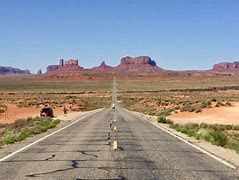
And tonight he’s shown a valley.
Fire on one side — the heat of every appetite that ever owned him.
Ice on the other — the cold of every duty he ever ignored.
A shining guide leads him toward the north‑east, not to frighten him, but to wake him.
“Fear not… it is God who restores to me my life.”
A man raised from the dead doesn’t get to live like he used to.
So he sits with the ember and the burn, knowing the cheap smoke is the reminder:
You’ve seen the fire and the ice. Now live like a man who won’t die in either.
JUNE 13 Saturday-Immaculate Heart
of Mary (again)
Fatima June 13 Vision-Saint Anthony of Padua-Yukon Territory
created, 1898
1 Chronicles, Chapter 22, Verse 11-13
“Now, my son, the LORD be with you,
and may you succeed in building the house of the LORD your God, as he has said
you shall. But may the LORD give you prudence and discernment
when he gives you command over Israel, so that you keep the law of the LORD,
your God. Only then shall you succeed, if you are careful
to observe the statutes and ordinances which the LORD commanded Moses for
Israel. Be strong and steadfast; do not FEAR
or be dismayed.
This
is David’s farewell blessing to his son, soon to be King Solomon. It is the
wish of David that Solomon finishes the Temple of the Lord. Yet, what David may
not understand is that eventually the physical temple of God, where the Holy
Spirit of God actually dwells moves from the physical temple to a new eve and
recreates man in His own image-in spirit and truth. Mary becomes the Ark of the
Covenant and gives birth to Christ. Christ gives us His flesh and we are in
fact the new temples of God.
The
Temple of God[1]
David
starts making plans together for a Temple.
He
finds builders and workers. He set aside stones, iron, bronze, and cedar for
the building.
Of
course, David knows he won't be the one to actually oversee the building of the
Temple. His son, Solomon, is. But Solomon is "young and
inexperienced" so he'll need some help in order to make this the greatest
temple the world has ever seen. God deserves nothing less.
David
goes to his son and lays out his plans for the Temple. He tells Solomon that he
would really like to be the one to do the work, but that God told him not to
chance it. It seems that David has killed too many people (what with all those
wars he was always fighting in). God can't have his house tainted by all that
blood.
But
Solomon will be a peaceful king and Israel will be a peaceful place while he's
in charge. That's a way better time to build a temple.
David
finishes by telling Solomon that he'll be successful if he always listens to
God and stays faithful.
Yes,
we are the receivers of the mercies of God. Let us honor and reflect on the
Mother of Christ by creating a peaceful garden in our home (temple) in which to
reflect on this.
Mary Garden[2]
The
joy over the appearance of new plants and flowers in spring prompted man to
attribute to them a special power of protection and healing. People planted
special spring flower gardens; they brought branches of early-blossoming
plants, like pussy willows, into their homes; they decorated themselves and
their living rooms with wreaths of flowers and clusters of blossoms. A striking
Christian variation of these nature rites was the medieval custom of planting
"Mary gardens," which were made up of all the flowers and herbs that
are ascribed by love and legend as a special tribute to the Blessed Virgin.
This charming and inspiring tradition has been revived in many places in Europe
and more recently in this country.
Directions
In
a typical Mary Garden, the statue of the Madonna occupies a place of honor,
either in the center or in a grotto against the wall, with, usually, a birdbath
or bubbling fountain built in front of it. Some of the more familiar plants of
the many that belong in a typical Mary Garden are:
Columbine
and Trefoil are said to have sprung forth at the touch of Mary's foot,
and consequently bear the popular names Our Lady's shoes or Our Lady's
slippers.
Marigold (Mary's bud) has bell-shaped blossoms of
vivid yellow. An old legend says, "Her dresses were adorned with
Marigold." This flower was used to decorate her shrines for the Feast of
the Annunciation (March 25) and during the month of May.
Lily-of-the-valley (Our Lady's tears). This delicate
flower is still widely used in Germany, there it is called Maiglockchen
(May bells), to decorate the Mary shrines in churches and homes during the
Virgin's month (May).
Foxgloves thrive in moist and shaded places; they
blossom in many colors and present a most attractive sight with their clusters
of little bells, which were called Our Lady's thimbles in medieval times.
Snowdrop. This charming flower is the first herald
of spring in Europe. It often blossoms as early as Candlemas (February 2)
between batches of melting snow; hence the name. In Germany it is called
"Snow bell" (Schneeglocklein). Little bouquets of snowdrops
are the first floral tribute of the year at the shrines of the Madonna on
Candlemas. It is a popular emblem of Mary's radiant purity and of her freedom
from any stain of sin.
Lily. This stately and dignified flower has been
associated from ancient times with Jesus and Mary, and is called Madonna lily
in many parts of Europe. At Easter its brilliant and fragrant blossoms
symbolize the radiance of the Lord's risen life. Later in the year it is used
to decorate the shrines of Mary, especially on July 2, the Feast of the
Visitation. It also is an old and traditional symbol of innocence, purity, and
virginity.
Rosemary produces delicate and fragrant blossoms of pale blue color in early spring. according to legend, the plant originally bloomed in white; however, it turned blue (Mary's color) in reward for the service it offered when Our Lady looked for some bush on which to spread her Child's tiny garments after having washed them on the way to Egypt. The bushes do not grow very tall but as they grow older, they spread out and thicken, forming a dense bush. There is an old superstition that "the rosemary passeth not commonly the height of Christ when he was on earth."
Violets are dedicated to Mary as symbols of her
humility. They are said to have blossomed forth outside her window when she
spoke the words, "Behold, I am a handmaid of the Lord." Leaving her,
the angel of God blessed the little flowers in passing, thus endowing them with
the tenderest and most beautiful fragrance of all plants.
Roses
were associated with Mary from early times. Saint Dominic (1221) is credited
with the spreading of the familiar devotion called the "Rosary (rosarium)
of the Blessed Virgin Mary." The word "rosary" originally meant
a rose garden but was later used in the sense of "rose garland."
Three colors are especially consecrated to Mary: white roses as symbols of her
joys, red roses as emblems of her sufferings, and yellow (golden) roses as
heralds of her glories.
Copilot’s Take
David’s farewell charge to Solomon
is more than a father’s last instruction; it is the Old Testament blueprint for
how God confronts evil in every age. David wants to build a physical temple,
but God desires something deeper: a people capable of carrying His presence.
The command is simple and severe—be strong, be steadfast, do not fear. Solomon
will build with cedar and bronze, but God will build with prudence,
discernment, and fidelity. The true Temple begins not in stone but in the heart
that listens.
In the fullness of time, Mary
becomes the living Temple, the Ark in whom God begins the reconstruction of
humanity. Her Immaculate Heart is the place where the Holy Spirit dwells
without resistance, the place where the new creation begins. Fatima’s June 13
vision reveals this Heart surrounded by thorns—not as a symbol of defeat, but
as the sign that love suffers, intercedes, and triumphs. Her Heart is not
sentimental; it is strategic. It is God’s chosen battleground against the
powers of darkness.
The Catechism names this
battleground with clarity: the whole of human history is a “dour combat” with
evil, and the human heart is wounded, inclined toward sin, unable to resist
without grace. Yet God permits this struggle because He draws a greater good
from it. Evil is not abstract; it is personal. The petition “deliver us from
evil” refers to the Evil One, the adversary who opposes God’s plan. Christ has
conquered him, but the battle continues in history and in each soul. The
Immaculate Heart shows how to stand in that battle without fear.
Mary’s virtues are not decorative; they are weapons. Humility stronger than pride, purity stronger than corruption, obedience stronger than rebellion. This is why the medieval Mary Garden was more than a charming custom. Each flower was chosen as a catechism in bloom: violets for humility, lilies for purity, rosemary for hidden fidelity, roses for joy, sorrow, and glory woven into one life. A Mary Garden is a quiet act of resistance, a domestic sanctuary where the virtues of Mary take root in the soil of one’s own home.
In this way, the Mary Garden
becomes a school of spiritual architecture. It teaches that God confronts evil
not first through force but through formation. Not by overpowering the world
but by consecrating the heart. Not by matching the violence of darkness but by
cultivating the light that darkness cannot overcome. The garden outside becomes
an icon of the garden within, where grace grows in silence and beauty becomes
strength.
June 13 gathers all these
threads—David’s charge, Solomon’s temple, Mary’s Heart, Fatima’s warning, the
Catechism’s realism—and weaves them into a single truth: the Temple of God is
now the human heart, and the battleground of history is the battleground of
fidelity. The Immaculate Heart is God’s answer to evil, not through domination
but through consecration, not through fear but through steadfastness, not
through escape but through engagement in purity and truth.
To honor the Immaculate Heart is
to let God build His Temple in you. To cultivate a Mary Garden is to cultivate
the virtues that confront evil without becoming like it. And to pray “deliver
us from evil” is to stand with Mary in the victory Christ has already won,
allowing your own heart to become a place where God dwells, fights, and
triumphs today.
Fatima June 13 Vision
Mary is from the line of David and as Queen of Heaven desires to
lead us to the promised land of Her son. We should listen to Her Fatima
messages.
Fatima
VATICAN CITY (CNS) -- While conversion and prayer are at the heart
of Mary's messages at Fatima, Portugal, the miracles and unexplained phenomenon
that accompanied the events 100 years ago continue to intrigue believers and
nonbelievers alike. The apparitions of Mary at Fatima in 1917 were not the
first supernatural events reported there. Two years before Mary appeared to the
three shepherd children -- Lucia dos Santos and her cousins, Jacinta and
Francisco Marto -- they saw a strange sight while praying the rosary in the
field, according to the memoirs of Sister Lucia, who had become a Carmelite
nun. "We had hardly begun when, there before our eyes, we saw a figure
poised in the air above the trees; it looked like a statue made of snow,
rendered almost transparent by the rays of the sun," she wrote, describing
what they saw in 1915. The next year, Francisco and Jacinta received permission
to tend their family's flocks and Lucia decided to join her cousins in a field
owned by their families. It was 1916 when the mysterious figure appeared again,
this time approaching close enough "to distinguish its features."
"Do not be afraid! I
am the Angel of Peace. Pray with me," Sister Lucia recalled the angel
saying. The three told no one about the angel's visit and received no more
heavenly visits until May 13, 1917. While the children tended their sheep and
played, they were startled by two flashes of lightning. As they made their way
down a slope, the children saw a "lady all dressed in white" standing
on a small tree. It was the first of six apparitions of Mary, who gave a
particular message or revelation each time:
· May 13, 1917. When asked by the
children who she was and where she came from, the lady said she was "from
heaven" and that she would reveal her identity later. She asked the
children to come back to the Cova da Iria on the 13th day of the month for the
next six months, and she asked them to pray the rosary every day "in order
to obtain peace for the world" and the end of World War I.
· June 13, 1917. The lady said she would take Francisco and Jacinta to heaven soon while Lucia would remain on earth for "sometime longer" to establish devotion to the Immaculate Heart.
· July 13, 1917. The lady said she would
reveal her identity in October and "perform a miracle for all to see and
believe." After telling the children to make sacrifices for sinners, she
revealed three secrets; two of the secrets were not shared publicly until 1941
and the third secret, written down by Sister Lucia and sent to the Vatican, was
not released until 2000.
The first secret involved a vision of hell in
which the children saw "a sea of fire" with demons and human souls
shrieking "in pain and despair." In her memoir, Sister Lucia said
people nearby, who had begun gathering around the children on the 13th of the
month, heard her "cry out" during the frightening revelation.
The second secret was that while World War I
would come to end, a "worse one will break out" if people continued
offending God. The children were told that calamity would be prevented if
Russia was consecrated to the Immaculate Heart. Although Sister Lucia confirmed
that the consecration was done properly by Pope Pius XII in 1942 and by St.
John Paul II in 1984, some Fatima devotees continue to argue that it was not.
The third and
final secret, published 83
years after the Fatima apparitions, was a vision of a "bishop dressed in
white" shot down amid the rubble of a ruined city. The official Vatican
interpretation, discussed with Sister Lucia before its publication, was that it
referred to the persecution of Christians in the 20th century and,
specifically, to the 1981 assassination attempt on the life of St. John Paul
II. Cardinal Joseph Ratzinger, the future Pope Benedict XVI, was prefect of the
Congregation for the Doctrine of Faith at the time of the third secret's
publication in 2000. Presenting the secret and the interpretation to the press,
he said the vision's purpose was not to show an "irrevocably fixed
future" but to "mobilize the forces of change in the right
direction."
· Aug. 19, 1917. The lady again said she
would perform a miracle in October and asked that the money given by pilgrims
be used to build a chapel on the site of the apparitions.
· Sept. 13, 1917. The lady asked them to
continue to pray the rosary "to obtain the end of the war," and she
said that Jesus, St. Joseph, Our Lady of Sorrows and Our Lady of Carmel would
appear during the miracle in October.
· -- Oct. 13, 1917. Despite the pouring rain, tens of thousands of people went to the Cova da Iria to witness the long-awaited miracle. The lady identified herself as "Our Lady of the Rosary" and said the war would end and the soldiers would return home. After asking that people cease to offend God, she opened her hands, which reflected a light toward the sun. Sister Lucia recalled crying out, "Look at the sun!" As the crowds looked on, the sun appeared to "dance," spinning and changing colors. The children also saw the promised figures of Jesus, St. Joseph and Mary. Amazement at the "dancing sun" turned to panic when the sun seemed to hurl toward earth. Fearing the end of the world, some people screamed and ran, some tried to hide and others remained on their knees, praying for mercy. Then the sun returned to its place. Thirteen years after Mary's final apparition at Fatima, the bishop of Leiria declared the visions of the three shepherd children "worthy of belief" and allowed the veneration of Our Lady of Fatima. However, the bishop did not recognize the "dancing sun" as miraculous.
St. Anthony[3]
Anthony is one of the most
popular saints in the Church. He is the patron of lost things and numerous
other causes. In Brazil, he is considered a general of the army; he is the
patron of the poor and has been recognized as a wonderworker from the moment of
his death. He was born in Portugal and entered the Augustinian monastery of Sao
Vicente in Lisbon when he was fifteen. When news of the Franciscan martyrs in
Morocco reached him, he joined the Franciscans at Coimbra. At his own request,
he was sent as a missionary to Morocco, but he became ill, and on his return
journey his boat was driven off course and he landed in Sicily. He took part in
St. Francis' famous Chapter of Mats in 1221 and was assigned to the Franciscan
province of Romagna. He became a preacher by accident. When a scheduled
preacher did not show up for an ordination ceremony at Forli, the Franciscan
superior told Anthony to go into the pulpit. His eloquence stirred everyone,
and he was assigned to preach throughout northern Italy. Because of his success
in converting heretics, he was called the "Hammer of Heretics" and
because of his learning, St. Francis himself appointed him a teacher of
theology. St. Anthony of Padua was such a forceful preacher that shops closed
when he came to town, and people stayed all night in church to be present for
his sermons. He became associated with Padua because he made this city his
residence and the center of his great preaching mission. After a series of
Lenten sermons in 1231, Anthony's strength gave out and he went into seclusion
at Camposanpiero but soon had to be carried back to Padua. He did not reach the
city but was taken to the Poor Clare convent at Arcella, where he died. He was
thirty-six years old, and the whole city of Padua turned out in mourning for
his passing. He was canonized within a year of his death and was declared a
Doctor of the Church by Pope Pius XII in 1946.
Patron:
Against shipwrecks; against starvation; against starving; American Indians;
amputees; animals; asses; barrenness; boatmen; Brazil; diocese of Beaumont,
Texas; domestic animals; elderly people; expectant mothers; faith in the
Blessed Sacrament; Ferrazzano, Italy; fishermen; harvests; horses; Lisbon,
Portugal; lost articles; lower animals; mail; mariners; oppressed people;
Padua, Italy; paupers; poor people; Portugal; pregnant women; sailors; seekers
of lost articles; shipwrecks; starvation; starving people; sterility;
swineherds; Tigua Indians; travel hostesses; travellers; watermen.
Things to
Do
St. Anthony was a
great lover of the poor. Deprive yourself of some treat and put the money saved
in the poor box.
St. Anthony's Bread
refers to an episode told in the Rigaldina, the oldest life of St.
Anthony. A Paduan mother, who lived near the Basilica during its construction,
had left little Thomas, her 20-month-old son, alone in the kitchen. The little
boy, while playing, ended up headfirst in a tub of water. His mother found him
lifeless. She screamed desperately but she didn't give up. She called on the
Saint. She made a vow: if she obtained the blessing of her child back to life,
she would donate to the poor bread equal to the weight of her son to the poor.
Her prayer was answered. Read more about St. Anthony's Bread and
consider donating to St. Anthony's charities.
St. Anthony is
invoked by women in search of good husbands, so if you're single and in search
of a spouse, today is a good day to make a visit to a church or shrine
dedicated to St. Anthony to make your petition to this generous saint!
Because St. Anthony was buried on a Tuesday and many miracles accompanied his funeral, Tuesdays are special days of honoring him throughout the year. It is customary to pray a Novena to him on thirteen consecutive Tuesdays.
St. Anthony Novena 1-on thirteen consecutive Tuesdays.
Saint
Anthony died on Friday, June 13th, 1231.
He was buried on the following Tuesday, June 17th.
No
miracle had occurred during the interval, but on that Tuesday his funeral
procession was changed into a continuous triumphal ovation on account of the
number and greatness of miracles by God occurring thru the intercession of
St. Anthony.
Apostolic
Exhortation[4]
Veneremur Cernui
– Down in Adoration Falling
of
The Most Reverend Thomas J. Olmsted, Bishop of Phoenix,
to Priests, Deacons, Religious and the Lay Faithful of the Diocese of Phoenix
on the Sacrament of the Holy Eucharist
My beloved Brothers and
Sisters in Christ,
Part III
Loving and Adoring the Eucharistic Lord
VI.
Pastors, have one Eucharistic procession each year in your parish.
101.
Of course, any Eucharistic procession should be reverent, beautiful, peaceful,
festive, and well-planned. But there will be much variation from parish to
parish. For a particular parish the procession could be several miles and in
highly public places; it could be shorter and simply around the parish campus.
Perhaps it involves a few dozen or several hundred people, or even much larger
crowds. For some parishes (like those in the cooler climates) the feast of
Corpus Christi may be the best time for a procession. For others (like those in
warmer places), parishes may want to choose another day each year.
Possibilities include the celebration of Our Lady of Guadalupe (our diocesan
patroness), Christ the King, Epiphany, Pentecost, the parish’s patronal feast
day, and the celebration of the anniversary of the dedication of the church.
VII.
Pastors, consider how you can make Eucharistic adoration a more available
evangelical opportunity.
102. As we discussed above, Eucharistic adoration can be a significant opportunity for evangelization because there we truly are able to bring a friend into the sacramental, living, bodily presence of Christ. The Eucharist is the greatest treasure of the Church for it is Christ Himself – and it is the treasure to which the church invites each man and woman in every place and time. But all priests know the confused and overwhelmed look that can often appear on the face of a non-Catholic after attending Mass for the first time. We can forget how rich, complex, and biblical are the symbolic words, images, and gestures in the Mass. It is like another world with a foreign language. For those unfamiliar with Catholic liturgy, this complexity can frequently be so alien as to be almost entirely impenetrable. Eucharistic adoration, on the other hand, is much simpler and less demanding for an un-evangelized person. It can be a kind of door or bridge to the full sacramental life of the church.
103.
What would it look like if your parish made Eucharistic adoration more
beautiful, available, and accessible to Catholics who could invite friends?
Are
times for adoration widely publicized?
Is
the place where adoration is held reverent, dignified, safe, and inviting?
How
often do Mass-going Catholics receive encouragement to invite friends and
family members to adoration?
Are
there resources which can easily assist non-Catholics and fallen-away Catholics
in beginning to learn to pray in the presence of the Eucharistic Lord?
To be continued…
Bible
in a year Day 343 God Uses Paul's Past
In Acts 22, Paul's testimony falls on hostile Roman ears, and he
narrowly escapes scourging by way of his Roman citizenship. Reflecting on this
incident, Fr. Mike reminds us that God uses Paul's past to further his
ministry, and that God does the same with each of us, today. Commenting on
today's readings from 2 Corinthians, Fr. Mike highlights that we are called to
be cheerful givers and disciplined thinkers. He also points out that, as Paul
reminds us, the most important ministry credential is to be called by God and
equipped by his grace. Today's readings are Acts 22, 2 Corinthians 9-11, and
Proverbs 29:5-7.
Yukon Territory created, 1898[5]
The Yukon, a territory in northwest Canada, is wild, mountainous and sparsely populated. Kluane National Park and Reserve includes Mount Logan, Canada’s highest peak, as well as glaciers, trails and the Alsek River. In the far north is Ivvavik National Park, with protected calving grounds for Porcupine caribou. In the south are numerous glacier-fed alpine lakes, including boldly colored Emerald Lake.
The '20-5-3' Rule-How Much Time to Spend Outside[6]
Americans today spend 92
percent of their time indoors, and their physical and mental health are
suffering. Use this three-number formula to make yourself stronger and happier.
The herd of 400-pound caribou was running 50 miles an
hour and directly at me. The 30 animals had been eating lichen in the Arctic
tundra in Alaska when something spooked them. I was sitting in their escape
route. The ground began to vibrate once they cracked 100 yards. At 50 yards, I
could see their hooves smashing the ground and kicking up moss and moisture.
Then they were at 40 yards, then 35.
I could hear their breathing, smell their coats, and see all
the details of their ornate antlers. Just as I was wondering if the rescue
plane would be able to spot my hoof-pocked corpse, one of the caribou noticed
me and swerved. The herd followed, shaking the earth as they swept left and
summited a hillcrest, their antlers black against a gold sky.
That moment when those caribou shook the earth also shook my
soul. It was transcendent, wild as a religious experience. And it’s not even
the most intense thing I did in Alaska. I experienced savage weather, crossed
raging rivers, and faced a half-ton grizzly. My brain was feeling less hunkered
down in its typical foxhole—a state I’d compare to that of a roadrunner on
meth, dementedly zooming from one thing to the next. My mind felt more like it
belonged to a monk after a month at a meditation retreat. I just
felt . . . better. The biologist E. O. Wilson put what I was feeling this way:
“Nature holds the key to our aesthetic, intellectual, cognitive, and even
spiritual satisfaction.”
When I returned from the wild, my Zen-like buzz hung around
for months. To understand what was happening, I met with Rachel Hopman, Ph.D.,
a neuroscientist at Northeastern University. She told me about the nature
pyramid. Think of it like the food pyramid, except that instead of recommending
you eat this many servings of vegetables and this many of meat, it recommends
the amount of time you should spend in nature to reduce stress and be
healthier. Learn and live by the 20-5-3 rule.
20 Minutes
That’s the amount of
time you should spend outside in nature, like a neighborhood park, three times
a week. Hopman led a new study that concluded that something as painless as a
20-minute stroll through a city botanical garden can boost cognition and memory
as well as improve feelings of well-being. “But,” she said, “we found that
people who used their cell phone on the walk saw none of those benefits.”
Other research
discovered that 20 minutes outside three times a week is the dose of nature
that had the greatest effect on reducing an urban dweller’s levels of the
stress hormone cortisol.
In nature, our brains enter a mode called “soft fascination.” Hopman described it as a mindfulness-like state that restores and builds the resources you need to think, create, process information, and execute tasks. It’s mindfulness without the meditation. A short daily nature walk—or even a walk down a tree-lined street—is a great option for people who aren’t keen on sitting and focusing on their breath. But turn off your phone—alerts from it can kick you out of soft-fascination mode.
5 Hours
The minimum length of time each month you should spend in
semi-wild nature, like a forested state park. “Spending more time in wilder
spaces does seem to give you more benefits,” said Hopman.
A 2005 survey conducted in Finland found that city dwellers
felt better with at least five hours of nature a month, with benefits
increasing at higher exposures. They were also more likely to be happier and
less stressed in their everyday lives.
The Finnish government then funded another study in 2014 in
which the scientists dumped people in a city center, a city park, and a
forested state park. The two parks felt more Zen than the city center. No
shocker. Except that those walking in a state park had an edge over the
city-park people. They felt even more relaxed and restored. The takeaway: The
wilder the nature, the better.
Nature has these effects on the mind and body because it
stimulates and soothes us in unusual and unique ways. For instance, in nature
you are engulfed in fractals, suggested Hopman. Fractals are complex patterns
that repeat over and over in different sizes and scales and make up the design
of the universe. Think: trees (big branch to smaller branch to smaller branch
and so on), river systems (big river to smaller river to stream and so on),
mountain ranges, clouds, seashells. “Cities don’t have fractals,” said Hopman.
“Imagine a typical building. It’s usually flat, with right angles. It’s painted
some dull color.” Fractals are organized chaos, which our brains apparently
dig. In fact, scientists at the University of Oregon discovered that Jackson
Pollock’s booze-and-jazz-fueled paintings are made up of fractals. This may
explain why they speak to humans at such a core level.
Nature lifts us in other ways, too: Think smells and sounds.
The feeling of the sun’s warm rays. Or just the fact that you’re getting out of
the stress of your home or office. “It’s probably a mix of a lot of things,”
said Hopman. Environments like cities, with their frenetic pace, right angles,
loud noises, rotten smells, pinging phones, and to-do lists, don’t offer this.
3 Days
This is the top of the pyramid. Three is the number
of days you should spend each year off the grid in nature, camping or renting a
cabin (with friends or solo). Think: places characterized by spotty cell
reception and wild animals, away from the hustle and bustle.
This dose of the wildest nature is sort of like an extended
meditation retreat. Except talking is allowed and there are no gurus. It causes
your brain to ride alpha waves, the same waves that increase during meditation
or when you lapse into a flow state. They can reset your thinking, boost
creativity, tame burnout, and just make you feel better.
This is likely why one study found that three days in the wild boost’s creativity and problem-solving abilities and another found that U. S. military vets who spent four days white-water rafting were still buzzing off the wild a week later. Their PTSD symptoms and stress levels were down 29 and 21 percent, respectively. Their relationships, happiness, and general satisfaction with their lives all improved as well.
When I returned from Alaska, my wife and I moved to the edge
of the desert in Las Vegas. She wanted a shorter commute, and I wanted more
access to nature. I now walk my dogs through red-rock trails for at least 20
minutes daily and on Sunday do a long trail run deep into the canyons to rack
up my five-hour quota for the month. This summer, I’m planning a weeklong
backcountry fly-fishing trip in Idaho’s Frank Church–River of No Return
Wilderness Area. Hoping I’ll return less frazzled, fitter, and feeling more
alive.
Adapted from the book
The Comfort Crisis: Embrace Discomfort to Reclaim Your Wild, Happy, Healthy
Self, by Michael Easter, out now from Rodale Books. Copyright © 2021 by
Michael Easter.
Around the Corner
This
is the day the LORD has made.
let
us rejoice in it and be glad.
(Psalm
118:24)
Asked Copilot: How to be a
holy catholic politician and leader?
Being a holy
Catholic politician and leader requires a deep commitment to faith, integrity,
and service. Here are some key principles to guide you:
1. Live by Catholic Moral Teachings
Uphold the dignity
of every human person, from conception to natural death.
Promote justice,
charity, and the common good.
Defend religious
freedom and moral values in governance.
2. Practice Virtuous Leadership
Lead with
humility, honesty, and integrity.
Serve the people
selflessly, prioritizing their well-being over personal gain.
Be a model of
ethical behavior in both public and private life.
3. Engage in Faithful Decision-Making
Align policies
with Catholic social teachings, including care for the poor, protection of
families, and stewardship of creation.
Seek wisdom
through prayer, scripture, and guidance from Church leaders.
Stand firm in your
convictions, even when facing political pressure.
4. Be a Witness to Christ in Politics
Evangelize through
your actions, showing Christ’s love in governance.
Support laws that
reflect Catholic values, such as those promoting justice, peace, and human
dignity.
Maintain a strong personal prayer life and participate in the sacraments regularly.
5. Work for Unity and the Common Good
Foster dialogue
and cooperation among different political and religious groups.
Promote policies
that benefit all people, especially the marginalized.
Be a peacemaker,
seeking reconciliation and understanding in political discourse.
For inspiration,
you can look at Catholic politicians who have upheld their faith in public
service. The National Catholic
Register discusses the challenges and responsibilities of Catholic
politicians, while TIME
highlights notable Catholic lawmakers in the U.S.
Do not pour out your
feelings.
A talkative soul will more easily
be attacked by the devil. Pour out your feelings to the Lord only. Remember,
the good and evil spirits hear what you say aloud. Feelings are fleeting. Truth
is the compass. Interior recollection is spiritual armor.
Saturday Litany of the Hours Invoking the Aid of
Mother Mary
Bucket Item trip: Chapelle
Sainte-Marie, Bruge, Belgium
National
Migraine and Headache Awareness Month
National
Movie Night dinner and a movie
Spirit Hour: World Gin Day
FEAR IN THE NIGHT (1946)
DeForest Kelley • Paul Kelly • Ann Doran
Directed by Maxwell Shane
A claustrophobic crime drama wrapped in dream‑logic paranoia,
Fear in the Night is not merely a noir curiosity.
It is a meditation on guilt —
the terror of a conscience that refuses to stay buried,
the thin line between memory and imagination,
and the dread that comes when a man suspects
he may be his own worst enemy.
It is the tale of a bank clerk haunted by a murder he may have committed,
a brother‑in‑law who becomes both investigator and confessor,
and a world where mirrors reveal more than a man wants to see.
And then the reckoning comes —
not through gunfire or chase,
but through the slow tightening of truth
around a man who can no longer hide from himself.
1. Production & Historical Setting
A Postwar Nation Wrestling With Its Shadows
Released in 1946, as America emerged from World War II,
the film reflects a country learning to live
with the nightmares it carried home.
Noir became the language of unease —
the sense that evil is not always “out there,”
but sometimes inside the man shaving in the mirror.
DeForest Kelley: The Innocent Who Isn’t Sure
In his film debut, Kelley plays Vince Grayson,
a man terrified of his own mind.
He is soft‑spoken, decent,
and yet haunted by the possibility
that he has crossed a line he cannot remember.
Paul Kelly: The Hard‑Edged Anchor
As Cliff Herlihy, he is the steady presence —
skeptical, loyal, and unwilling to let fear
write the final chapter of a man’s life.
2. Story Summary
A Nightmare That Won’t Let Go
Vince wakes from a dream of murder —
a mirrored room, a body, a knife —
and finds marks on his arm that shouldn’t be there.
A Brother‑in‑Law Becomes a Lifeline
Cliff listens, doubts, investigates,
and slowly realizes the dream may not be a dream at all.
The Trap Tightens
Hypnosis, manipulation, and a criminal scheme
pull Vince deeper into a web he never meant to enter.
The Truth Breaks Through
The real killer’s plot unravels,
and Vince is forced to confront
how close he came to losing himself.
3. Spiritual & Moral Resonances
A. The Mirror Never Lies
A man can hide from others,
but not from the truth reflected back at him.
B. Fear Is a Poor Master
Vince’s terror nearly destroys him.
Fear always grows when left unspoken.
C. Guilt Demands Illumination
Whether earned or imagined,
guilt must be brought into the light
before it can be healed.
D. Evil Exploits the Vulnerable
The villain preys on Vince’s uncertainty —
a reminder that sin often begins
with confusion and isolation.
E. Grace Works Through Steadfast Companions
Cliff’s loyalty becomes the hinge of redemption.
God often saves a man
through the one person who refuses to abandon him.
4. Hospitality Pairing — A Noir Nightcap
Drink: Black coffee with a splash of rye — sharp, sleepless, honest.
Plate: Salted peanuts — simple, tense, the snack of a man pacing the floor.
Atmosphere: A dim lamp, Venetian‑blind shadows, the hum of a fan —
the world of a man afraid to close his eyes.
Symbol: A cracked mirror — the object that forces a man
to face what he fears he might be.
5. Reflection Prompts
- What fear have I allowed to shape my decisions.
- Where do I avoid the “mirror” — the truth about myself I don’t want to see.
- Who is the Cliff Herlihy in my life — the one who steadies me when I’m unraveling.
- What guilt have I carried alone that needs to be spoken aloud.
- Where is God inviting me to step out of fear and into clarity.




Comments
Post a Comment