NIC’s Corner-Try Legendary Pizza Recipes
· Religion in the Home for Preschool: February
· Spirit Hour: Burgundy Wine or Kahlua
· Writer John Steinbeck born 1902-1968
· Bucket List trip: Chesa Grischuna
· How to celebrate Feb 27th
o Rise and shine! Start your day with a hearty breakfast to fuel the adventures ahead. Whip up some toast, bacon, eggs, and a steaming cup of coffee – celebrate The Big Breakfast Day in style. As you savor each bite, consider the importance of protein in your diet. Pack a protein-packed snack for an on-the-go boost later in the day to honor National Protein Day.
o Feeling nostalgic? Throw it back with some retro tunes playing in the background. Dress in your favorite vintage outfit and groove to the music – Retro Day is all about embracing the past. Take a moment to appreciate the simpler times and maybe even challenge your friends to a retro-themed trivia game.
o In the midst of the fun, don’t forget to indulge your taste buds with some delicious chili. Whether you prefer it mild or spicy, National Chili Day is the perfect excuse to whip up a big pot and share with your loved ones. Pair it with a glass of Kahlua to toast to friendship and good times on National Kahlua Day.
o Feeling adventurous? Explore the outdoors and embark on a polar bear plunge to mark International Polar Bear Day. Embrace the cold water and revel in the refreshing feeling afterwards. As you dry off, why not whip up a batch of strawberry smoothies to celebrate National Strawberry Day? It’s a refreshing way to cap off your chilly adventure.
o As the day winds down, wind up your creativity with a fun Pokemon-themed craft. Create your favorite Pokemon out of paper or clay to commemorate National Pokemon Day. Unleash your inner artist and let your imagination run wild.
o To end the day on a sweet note, treat yourself to a warm slice of khachapuri, a traditional Georgian cheese bread, on Khachapuri Day. Indulge in this cheesy delight and savor the unique flavors.
o And there you have it – a jam-packed day celebrating a medley of weird national holidays. So go forth and make the most of these offbeat celebrations!
Nic’s Rich/Poor Tour
💎 Jordan
vs Sri Lanka
Crossroads of Covenant / Island of Resilience
Jordan and Sri Lanka sit at the very center of the world’s economic ladder — not wealthy, not destitute, but suspended between stability and struggle. Jordan is a desert kingdom shaped by covenant, hospitality, and the weight of biblical geography. Sri Lanka is a wounded island, recovering from crisis after crisis, yet carrying a deep spiritual resilience that refuses to die. Together they form the hinge of the global pilgrimage — the middle point where the world’s story turns.
🇯🇴 Jordan — Stable, Pressured, and Historically Sacred
GDP per capita (PPP): ~$13,000–$14,000 (2024)
🧮 Why Jordan Sits at the Center
Resource‑poor but politically stable
Massive refugee burden from Syria, Iraq, and Palestine
Tourism anchored in sacred geography (Jordan River, Mount Nebo, Petra)
Strategic location between conflict zones
Economy balanced between aid, services, and remittances
✝️ Christian Landscape
Ancient roots: early desert monasticism, baptismal sites
Small minority: ~2–4% Christian
Catholic presence: Latin, Melkite, and Maronite communities
Interfaith coexistence: Christians as bridge‑builders
Pilgrimage: Bethany Beyond the Jordan
⚠️ Challenges
Water scarcity
Economic stagnation
Youth unemployment
Refugee pressure on parishes
🌿 Pilgrimage Cue
Jordan is a crossroads of covenant
— a land where God has spoken for millennia, and where the Church survives quietly through hospitality, memory, and steadfastness.
🇱🇰 Sri Lanka — Wounded, Devout, and Spiritually Resilient
GDP per capita (PPP): ~$13,000–$14,000 (2024)
🧮 Why Sri Lanka Sits at the Center
Post‑crisis recovery after economic collapse
Tourism rebuilding
Agriculture and textiles anchor the economy
Ethnic and religious complexity
Large diaspora sending remittances
✝️ Catholic Landscape
~7% Catholic — unusually high for South Asia
Deep Marian devotion (Our Lady of Madhu)
Church as healer after civil war
Youthful parishes with strong devotional culture
Martyrdom: Easter 2019 bombings
⚠️ Challenges
Economic hardship
Political instability
Religious tensions
Migration draining young talent
🌿 Pilgrimage Cue
Sri Lanka is an island of resilience
— a Church that rises again and again, carrying wounds with dignity and turning suffering into intercession.
🕊️ Editorial Reflection
Jordan and Sri Lanka form the hinge of the world’s story — the midpoint between wealth and poverty, comfort and crisis, memory and rebuilding.
Jordan is a crossroads of covenant — ancient, steady, and quietly faithful.
Sri Lanka is an island of resilience — wounded, musical, and defiantly hopeful.
One preserves sacred memory.
The other embodies sacred endurance.
Both stand at the center of the global pilgrimage, reminding us that the middle of the world is not mediocrity but balance — the place where the extremes meet.
FEBRUARY 27 Friday of the First Week of Lent-Ember Day
Deuteronomy, Chapter 4, Verse 9-10
However, be on your guard and
be very careful not to forget the things your own eyes have seen, nor let them
slip from your heart as long as you live, but make them known to your children
and to your children’s children, that
day you stood before the LORD, your God, at Horeb, when the LORD said to me:
Assemble the people for me, that I may let them hear my words, that they may
learn to FEAR me as long as they live in the land and may so teach their
children.
Moses’ use of the word fear here not in the sense of “be terrified,” but rather “manifest reverence or awe.” Christ’s mission of love was to move our hearts from reverence or awe of pure love: A love in which the heart of the beloved longs to do good works secretly in emulation of the God that is good to saint and sinner alike. Our church often instructs us to increase in ourselves Faith, Hope and Charity.
Lord, let me not fear
death with an empty fear, but
with a wise and holy fear. An empty fear does not make men any better, but a
wise and holy fear urges them to
improve their lives. I will prepare for death by trying today to please you
more and more in my thoughts, desires, words and actions. If I live this day as
You desire, I shall be ready at any moment, and death will be nothing worse
than Your loving call. Amen[1]
Copilot’s
Take
Lent
sharpens the soul by returning it to the things God has already shown us. What
Moses calls “fear” is really the discipline of remembering—holding fast to the
moments when God revealed Himself so clearly that they became anchors for a
lifetime. That kind of reverence steadies a man. It keeps his heart from
drifting into self‑reliance or forgetfulness, and it forms the quiet strength
that Christ later perfects: the strength to do good unseen, to love without
applause, to imitate the Father in the hidden places where holiness is actually
forged.
A day
like this—an Ember Day—presses that truth even deeper. It asks whether our
lives still reflect the God we claim to remember. Holy fear becomes the
interior posture that keeps us awake, honest, and ready. It is not dread but
clarity: the awareness that every thought, word, and action can be shaped
toward God if we choose it. When a man lives that way, death no longer
threatens him; it simply meets him as the moment when the One he has tried to
please finally calls him home.
Friday
of the First Week of Lent-Ember Day[2]
BE
merciful, O Lord, to Thy people, and as Thou makest them devout to Thee,
mercifully refresh them with kind assistance.
EPISTLE.
Ezech. xviii. 20-28.
Thus,
saith the Lord God: The soul that sinneth, the same shall die: the son shall
not bear the iniquity of the father, and the father shall not bear the iniquity
of the son: the justice of the just shall be upon him and the wickedness of the
wicked shall be upon him. But if the wicked do penance for all his sins, which
he hath committed, and keep all My commandments, and do judgment and justice,
living he shall live, and shall not die. I will not remember all his iniquities
that he hath done in his justice which he hath wrought, he shall live. Is it My
will that a sinner should die, saith the Lord God, and not that he should be
converted from his ways, and live?
But
if the just man turn himself away from his justice, and do iniquity according
to all the abominations which the wicked man useth to work, shall he live? all
his justices which he had done, shall not be remembered: in the prevarication,
by which he hath prevaricated, and in his sin, which he hath committed, in them
he shall die. And you have said: The way of the Lord is not right. Hear ye,
therefore, O house of Israel: Is it My way that is not right, and are not
rather your ways perverse?
For
when the just turneth himself away from his justice, and committeth iniquity,
lie shall die therein: in the injustice that he hath wrought he shall die. And
when the wicked turneth himself away from his wickedness, which he hath
wrought, and doeth judgment and justice: he shall save his soul alive. Because
he considereth and turneth away himself from all his iniquities which he hath
wrought, he shall surely live, and not die, saith the Lord Almighty.
GOSPEL.
John v. 1-15.
At
that time there was a festival-day of the Jews, and Jesus went up to Jerusalem.
Now there is at Jerusalem a pond, called Probatica, which in Hebrew is named
Bethsaida, having five porches. In these lay a great multitude of sick, of
blind, of lame, of withered, waiting for the moving of the water. And an angel
of the Lord descended at certain times into the pond: and the water was moved.
And he that went down first into the pond after the motion of the water, was
made whole of whatsoever infirmity he lay under. And there was a certain man
there, that had been eight-and-thirty years under his infirmity. Him when Jesus
had seen lying, and knew that he had been now a long time, He saith to him:
Wilt thou be made whole? The infirm man answered Him: Sir, I have no man, when
the water is troubled, to put me into the pond. For whilst I am coming, another
goeth down before me. Jesus saith to him: Arise, take up thy bed, and walk. And
immediately the man was made whole: and he took up his bed and walked. And it
was the Sabbath that day. The Jews therefore said to him that was healed: It is
the Sabbath, it is not lawful for thee to take up thy bed. He answered them: He
that made me whole, He said to me: Take up thy bed, and walk. They asked him
therefore: Who is that man who said to thee: Take up thy bed, and walk? But he
who was healed, knew not who it was. For Jesus went aside from the multitude
standing in the place. Afterwards Jesus findeth him in the temple, and saith to
him: Behold thou art made whole: sin no more, lest some worse thing happen to
thee. The man went his way and told the Jews that it was Jesus Who had made him
whole.
Ember
Friday[3]
Have you ever heard about
the Ember days, observed for most of the history of the Church prior to the
late 20th century? If you haven’t, don’t feel bad. Like many traditional
practices in the Church laden with deep meaning, Ember days have been chucked down
the Catholic memory hole. But fear not! This is why God created the Internet:
so, we can find all the neat things about Catholicism that are worth
knowing and sharing.
Four times a year, the
Church sets aside three days to focus on God through His marvelous creation.
These quarterly periods take place around the beginnings of the four natural
seasons that “like some virgins dancing in a circle, succeed one another with
the happiest harmony,” as St. John Chrysostom wrote. These four times are each
kept on a successive Wednesday, Friday, and Saturday and are known as “Ember
Days,” or Quatuor Tempora, in Latin. The first of these four
times comes in Winter, after the the Feast of St. Lucy; the second comes in Spring, the week after Ash Wednesday;
the third comes in Summer, after Pentecost Sunday; and the last comes in Autumn,
after Holy Cross Day.
Father Peter Carota at the
blog Traditional Catholic Priest offers some
additional historical information on
Ember days:
The Ember days are true
Catholic tradition dating actually dating back to the Apostles, (Pope Leo The
Great claims it was instituted by the Apostles). Pope Callistus (217-222)
in the “Liber Pontificalis” has laws ordering all to observe a fast three times
a year to counteract the hedonistic and pagan Roman rites praying for:
By the time of Pope
Gelasius, (492-496), he already writes about there being four times a years,
including Spring. He also permitted the conferring of priesthood and
deaconship on the Saturdays of Ember week. This practice was mostly
celebrated around Rome, from Pope Gelasius’ time, they began to spread
throughout the Church. St. Augustin brought them to England and the
Carolingians into Gaul and Germany. In the eleventh century, Spain
adopted them. It was not until Pope Gregory VII (1073-1085) that these Ember
days were prescribed for the whole Catholic Church as days of fast and
abstinence. He placed these “four mini-Lents” consisting of three days;
Wednesday, Friday and Saturday.
The purposes of these
“mini-Lents” were to pray, fast and to thank God for the gifts He gives us
through nature.
They follow the four seasons of the year with the beauty and uniqueness
of each particular season. They are here for us to teach us to use, with
moderation, what God gives us through nature, and to also share these gifts
with the poor.
So,
what does this mean for you?
Well,
because of the changes in Church law, not a whole lot. At least not officially.
The mandatory observation of Ember days was excised from Church practice during
the pontificate of Pope Paul VI. But as a voluntary practice,
there is much that is salutary in observing the Ember days of the Church.
I don’t know about you,
but as a typically indulgent American, I’ve never been very good at fasting.
Lately, I’ve noticed more and more people are advocating fasting as a
countermeasure in today’s troubling times. This is the first year I will be
observing these fasts, and I’ve got to tell you, I’m already pretty
famished and a bit punchy. But the way I see it, there’s no point in
continuing to put off the inevitable penance that I’m going to have to do for
being a big, fat sinner. To say nothing about making reparations for the
increasingly hostile darkness of a world steeped in its own sins. Fasting isn’t
going to get easier at some point in the future when I get “holier.” In fact,
I’m guessing the latter isn’t going to happen until I master the former. I
don’t think there’s ever been a time where fasting and penance are more needed
than right this moment. We can’t rely on others to do it for us. Gotta
cowboy up and put our mortification where our mouth is. What do you say? Who will be
hungry with me?!
What Is Lent?[4]
Lent is the
penitential season of approximately 40 days set aside by the Church in order
for the faithful to prepare for the celebration of the Lord’s Passion, Death
and Resurrection. During this holy season, inextricably connected to the
Paschal Mystery, the Catechumens prepare for Christian initiation, and current
Church members prepare for Easter by a recalling of Baptism and by works of
penance, that is, prayer, fasting and almsgiving.
Even in the early
Church, Lent was the season for prayerful and penitential preparation for the
feast of Easter. Though the obligation of penance was originally only imposed
on those who had committed public sins and crimes, by medieval times all the
faithful voluntarily performed acts of penance to repair for their sins.
Ash Wednesday is
the clarion call to “Repent and believe the gospel” (Mk 1:15). For the next
forty days, the faithful willingly submit to fasting and self-denial in
imitation of Our Lord’s forty-day fast in the desert. It is in these dark and
still nights, these desert-times, that the soul experiences its greatest
growth. There, in the inner arena, the soul battles the world, the flesh and
the devil just as Our Lord battled Satan's triple temptation in the desert. His
battle was external, for Jesus could not sin; our battle is interior, but with
a hope sustained by the knowledge of Christ’s Easter victory over sin and
death.
His victory is
our renewal, our “spring” — which is the meaning of the Anglo-Saxon word,
“lengten” or Lent. In this penitential season we have the opportunity to make
an annual spiritual “tune-up”, a 40-day retreat with Our Lord. Have we allowed
worldly cares and the “daily drama” to obscure our call to holiness? Have
self-love and materialism eroded our relationship with God? Then let us renew
our efforts, and through our Lenten observance, discipline the body and master
it as we “follow in the footsteps of the poor and crucified Christ” (St.
Francis of Assisi). Activity
Source: Original Text (JGM & MG) by Jennifer Gregory Miller and Margaret
Gregory
Worship Him and give Him all your
heart, mind, soul and will!
Grace at Meals[5]
Part and parcel of the breakdown of a family begins when the family no longer shares a communal meal. The strongest families are those who meet daily for the breaking of the bread and have an established time of the day when everyone is expected to eat together whether that meal is a breakfast, lunch or supper. When we “say grace” before (or after) our meals, we transform our family or lone meals into “sacraments” of God’s banquet. A meal shared in this manner is shared with God himself. In this way every meal, then, is a celebration of God’s creation and his providence.
Traditional Grace before meals
“Bless us, O Lord, and these, thy gifts, which we are about to receive from thy bounty. Through Christ, our Lord, Amen
The Devil and Temptations[6]
There are many and varied
ways in which sin and evil are presented to us in an attractive way.
Freeing My Own Self from the Power of Evil
·
Through
his passion, death, and resurrection, Jesus has broken the power of the Evil
One. When the influence of evil is perceived in one's own life, it most
frequently comes about from personal sin. Family members suffer because of the
sin of an individual member of the family. It is through the sacred power that
the Lord has placed in his Church that the evil of sin is conquered.
·
Through
medicine, psychology and other human means, suffering can often be alleviated.
But Jesus in his Church, has given us basic helps that are often neglected.
·
In
our day the Sacrament of Reconciliation has fallen into disuse. There exists a
power in this sacrament to break the power of the Evil One and sin that is not
possible otherwise.
·
Our
faith in the Eucharist is weakened. In this sacrament is the power and presence
of Jesus Himself. Persons who have actually needed exorcism from the power of
the Evil One have been cured by sitting in church in the presence of the
Blessed Sacrament, an hour each day, for one or two months. These were very
difficult cases.
·
Our
Blessed Mother has been designated by God as the one who crushes the head of
the serpent (Gen. 3:1s). The Rosary is a very powerful means of protection and
salvation. Many sons and daughters have been saved from the power of sin and
the loss of faith through the perseverance of their parents in saying the Holy
Rosary.
Posture and Prayer[7]
We
are composed of body and soul, “every part of the body is an expressive
instrument of the soul. The soul does not inhabit the body as a man inhabits a
house, it lives and works in each member, each fiber, and reveals itself in the
body’s every line, contour and movement.” Our bodies communicate respect or
contempt. By our gestures and the way, we comport ourselves we confirm his
presence. We are “ensouled” bodies as much as we are embodied souls. We should
always move as the Church directs us: sit, stand, bow, kneel, strike the
breast, make the Sign of the Cross, all in due time. The scriptures speak of
several postures of prayer: 1) Standing 2) Kneeling 3) bowing 4) prostrating.
Standing gives the expression to the
prayers of our heart. Standing is a sign of vigilance and action acknowledging
that we are the warriors of God, as a soldier on duty. A Knight always stood in
the presence of the King or Judge. Standing was a sign of deference and trust.
We acknowledge that none of our weapons or self-defenses can repel Him for He
alone is all powerful and all knowing. We are vulnerable in His presence.
Military officers know that comportment has serious consequences. Soldiers tend
to live up, or down to the way they carry themselves. That’s why there are
strict rules about how a soldier should stand when at attention. Bad posture is
bad for the spine and communicates disrespect for us and others. Standing
expresses the filial liberty given us by the risen Christ, who has freed us
from the slavery to sin.
Bowing or
genuflecting is an
act of showing recognition of our God. It is adoration. In bowing or
genuflecting we show our faith in the real presence of Jesus Christ in the
sacrament of the altar. To me every knee shall bow, every tongue shall swear.
Kneeling is the prayer posture of mothers,
rulers, lepers, and Jesus himself. Kneeling is the side of worship that is at
rest and is quiet; “I bow my knees before the Father”. (Eph. 3:14) Kneeling
expresses the recognition of our humility before the Almighty Lord (Phil 2:10).
Kneeling is associated with reverence, submission and obeisance. Kneeling
renders a person defenseless and unable to flee and shows a trust in a power
beyond the merely human.
Sitting-We spend a lot of time in church
sitting; by this position we show our receptiveness and our willingness to
listen and take the Word of God.
In prostration a person lies face down upon the
ground. We are connected to the earth from which we came. Prostrations are
reserved for most solemn moments, such as the ordination of a bishop or priest.
Remember our Lord prostrated Himself in the garden of Gethsemane. The posture
indicates the candidate’s inadequacy for the task to which he has been called.
Recall our Lord asking the Father to take to cup…but not my will but thine. Our
body expresses self-emptying.
Stations of the Cross and Soup Supper
Using red lentils can
remind us of the martyrdom of St. Polycarp or any other martyr.
Catholic Recipe: Red Lentil Soup
INGREDIENTS
- 1
1/2 c red lentils
- 8
c Meat stock
- 2
md Size onions
- 2
tb Butter
- 1/2
tb Flour
- 1
c Milk
- 3
Egg yolks
- 1
tb Salt
- 1/2
ts Black pepper
- 6
Slices of bread
- 2
tb Oil
Origin: Turkey
DIRECTIONS
1- Wash the lentils. Put
them in meat stock and 1 cup of water. Cook for 35-40 minutes until they are
tender. Pass them through a sieve.
2- Melt the butter in
another saucepan. Add chopped onions and fry them lightly for 7-8 minutes. Add
flour. Brown for 1 minute more. Add them to the meat stock with the lentil
puree. Add salt and pepper and let simmer.
3- Beat the egg yolks with
cold milk. Add to the boiling soup mix well. Turn the heat off as soon as it
starts boiling. Serve with bread cubes fried in oil.
Recipe Source: Recipes from Various Websites
Recognizing
that God the Father created man on Friday the 6th day I propose in
this blog to have an entry that shares on how to recreate and renew yourself in
strength, mind, soul and heart.
Being a catholic during the
Carnival season does not mean you cannot has fun but it also requires that you
use prudence and reason-maintain your backbone.
Your
Posture says a lot about you-stand tall have an erect bearing.
FM 20-21: War
Department Field Manual, 1946
Posture Training
GENERAL
PRINCIPLES OF
POSTURE TRAINING. There is no one “best posture” for all men because the
physical architecture of individuals differs according to the bony structure
they inherit. Therefore, to develop the best posture for each member of any
given group certain general principles must be applied intelligently to the
group as a whole as well as to each man. These principles are:
To teach the characteristics of good posture.
b. To provide an opportunity to “feel” or practice good posture.
c. To have the men practice proper posture until it feels more comfortable than
poor posture.
d. To motivate the men to acquire it as a habit.
CHARACTERISTICS
OF GOOD POSTURE. The first step in posture training is to teach what
good posture is. Many men have a misconception as to what constitutes good
posture. For example, they arch the lower back, thrust out the chest and
retract the shoulders in an exaggerated manner, or they spring their knees
backward. The characteristics of good posture are head balanced and erect,
chest held high without tension, abdomen flat, shoulders back and relaxed,
lower back only slightly curved, and knees straight but not stiff. Instructors
should explain and demonstrate the position of the various parts of the body in
proper posture.
TRAINING FOR GOOD
POSTURE. The men must be provided with opportunities to feel and
to practice good posture. Many individuals feel more natural while maintaining
a bad posture. Certain muscle groups must have special training to maintain
good posture without undue fatigue. The exercises below will provide this
training. The emphasis upon proper posture must not be confined to physical
training periods only. A good military bearing must be insisted upon until the
men assume it from habit.
MOTIVATING GOOD
POSTURE. Regardless of the amount of exercise and instruction
they get; men habitually assume good posture only if they want to.
That is why motivation is so important.
At the beginning,
a short talk should be given, illustrated if possible, on reasons for
cultivating good posture. Good posture has many values for the soldier. First,
a soldier is often judged by his appearance – the man with good posture looks
like a soldier, he commands attention. Secondly, it is an accepted
psychological fact that good posture is associated with good morale – a man
with a good posture feels better and is more positive. A man with poor posture
cannot feel as positive, consequently he may develop a negative and discouraged
attitude. Thirdly, good posture permits the body to function most efficiently.
This is because the opposing muscle groups balance, thus maintaining the bony
structure in a balanced position. The correct bony alignment provides for the
correct positions of the internal organs. The correct positions of the organs
assist them in the performance of their various functions. Less strain and
tension is placed upon bones, muscles, ligaments and organs.
The instructors
should always be excellent examples of good posture. They must be enthusiastic
about it and “sell it” to the men. Men with excellent posture should be
complimented. They should be reminded when they exhibit poor posture. This
should be done without nagging, and with humor, if possible.
Visual aids
should be utilized. A few pictures of good posture and a few signs at familiar
places will remind the men to emphasize good posture. These help to motivate
many of the men.
Posture judgments
help to motivate the men. The four posture silhouettes above are highly valid
standards by which to make such judgments. It takes a few minutes to judge 100
men, especially if they are inspected in small groups. They should also be judged
occasionally when off guard. Announcing the platoon with the best average
posture may stimulate friendly rivalry.
POSTURAL
EXERCISES
GENERAL. The ten
exercises below are designed to develop the postural muscles. All of these
exercises have SLOW CADENCE and two-count movements. They are especially
valuable for use in the “strength
course.”
EXERCISE 1
Starting
Position. Attention.
Movement:
Swing arms forward and upward to full stretch overhead and at
the same time rise high on toes.
Swing arms sideward and downward slowly and press back hard.
At the same time retract chin and let heels drop to the ground. Avoid an
exaggerated arch in lower back.
EXERCISE 2
Starting
Position. Trunk leaning forward about 60°, arms hanging downward
loosely from shoulders.
Movement:
Swing arms sideward and backward vigorously, retracting chin
forcefully and flattening upper back. Hold this position momentarily.
Recover to starting position.
EXERCISE 3
Starting
Position. Standing, fingertips touching shoulders, arms in front
of chest, and elbows downward.
Movement:
Move upper arms outward and backward, with elbows hugging sides. Hold
the position a full second while trying to force arms further around and back.
At same time, retract head and attempt to stretch upward.
Recover to starting position.
EXERCISE 4
Starting
Position. Kneeling on the mat, trunk bent sharply forward, hands
behind head.
Movement:
Still leaning forward, straighten upper back and press elbows and head
backward. At the same time pull in chin.
Recover to starting position.
EXERCISE 5
Starting
Position. Sitting on the floor, knees raised, trunk bent forward,
and arms stretched forward.
Movement:
Still leaning forward, swing arms upward and backward. At the
same time pull in chin.
Recover to starting position.
EXERCISE 6
Starting
Position. Lying face down on the floor, with elbows at sides and
fingertips on shoulders.
Movement:
Rotate arms
outward and pull elbows in hard to sides. At the same time pull in chin and
lift head about 6 inches from the floor. Hold this position a full second.
Recover to
starting position.
EXERCISE 7
Starting
Position. Bending forward about 45°, elbows horizontally sideward
from shoulders, forearms bent forward, palms down, thumbs just in front of
shoulders.
Movement:
Straighten elbows
and swing arms slowly but hard sideward and backward. At the same time retract
head.
Recover to
starting position.
EXERCISE 8
Starting
Position. Leaning slightly forward, elbows bent, and fingertips
touching shoulders.
Movement:
Make small
circles about a foot in diameter, elbows circling upward and backward. Press
arms backward and retract head. Movement is slow.
(2) After completing sufficient repetitions, recover to starting position.
EXERCISE 9
Starting
Position. Leaning slightly forward, arms horizontally at sides,
palms up.
Movement:
Make small
circles about a foot in diameter, hands circling upward and backward. Press
arms backward and retract head. Movement is slow.
After completing
sufficient repetitions, recover to starting position.
EXERCISE 10
Starting
Position. Arms overhead.
Movement:
Pull arms slowly
downward until fists are beside shoulders. Pull as though chinning.
Recover to
starting position.
Bible in a
year Day 240 Remaining
Humble
Fr. Mike touches on Proverbs 16:3, which is about giving everything in our lives to the service of the Lord. He also emphasizes how important it is to humble ourselves before the Lord, so to avoid becoming like the false prophets Jeremiah talks about today. Today's readings are Jeremiah 23, Daniel 4-5, and Proverbs 16:1-4.
Daily Devotions
·
Unite in the work of the Porters of St. Joseph by joining them
in fasting: Today's Fast: Protection
of Life from Conception until natural death.
·
Offering to
the sacred heart of Jesus
·
Make
reparations to the Holy Face
·
Rosary
[1] Paone, Anthony J., S.J. My Daily Bread, Confraternity
of the Precious Blood.
[2]Goffine’s Devout Instructions
[5] Hahn, Scott, Signs of Life; 40 Catholic Customs
and their biblical roots. Chap. 14. Grace at Meals.
[7] Hahn, Scott, Signs of Life; 40 Catholic Customs
and their biblical roots. Chap. 10. Posture.
Sundown (1941) — Overview
🎬 Basic Film Details
- Director: Henry Hathaway
- Studio: United Artists
- Genre: Wartime adventure / espionage drama
- Runtime: ~90 minutes
- Stars:
- Gene Tierney as Zia
- Bruce Cabot as Bill Crawford
- George Sanders as Major Coombes
- Harry Carey as Dewey
This was early in Gene Tierney’s career—just before Laura (1944) would make her iconic. Here she’s luminous, mysterious, and commanding in a role that mixes exoticism with moral gravity.
🌍 Plot Summary (Clean, Clear, Devotional‑Ready)
Set in British East Africa during WWII, the story centers on a remote outpost where British officers discover that Nazi agents are smuggling arms to local tribes, hoping to stir rebellion and destabilize the region.
Into this tense environment steps Zia (Gene Tierney)—a striking, enigmatic woman of mixed heritage who seems to know more about the arms trade than she initially reveals. Her loyalties are unclear, and her presence unsettles both the officers and the local political balance.
As the plot unfolds:
- Zia’s past is revealed to be deeply tied to the region’s tribal politics.
- The British officers—especially Bruce Cabot and George Sanders—struggle to discern friend from foe.
- A climactic confrontation exposes the Nazi plot and forces Zia to make a sacrificial, identity‑defining choice.
The film blends:
- espionage
- colonial tension
- wartime urgency
- personal redemption
It’s atmospheric, morally layered, and visually striking—especially the desert cinematography.
🕊️ Moral & Spiritual Resonance
1. Identity and Truth
Zia’s struggle with her heritage mirrors the human struggle to reconcile past, present, and calling. Her eventual clarity becomes a kind of conversion moment—choosing truth over survival.
2. Courage in the Shadows
Much of the film’s drama happens in hidden motives and quiet decisions. It’s a reminder that moral courage often happens long before the battle begins.
3. Light in the Desert
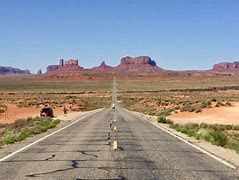
The desert setting becomes symbolic: barren, exposed, purifying. Characters are stripped down to their essentials. It’s a Lenten landscape—testing, revealing, refining.
🍷 Hospitality Pairing
Given the film’s setting and tone, here’s a pairing that fits your ritual‑hospitality framework:
Meal
- North African–inspired lentil stew with warm spices (cumin, coriander, cinnamon)
- Flatbread brushed with olive oil
- Dates or dried apricots for a simple, desert‑evocative sweetness
Drink
- A dry red with earthy notes—something that feels sun‑baked and grounded
- Or, for a non‑alcoholic option: mint tea, served hot, simple, and cleansing
Symbolic Touch
A single candle in a darkened room—echoing the film’s theme of light in a hostile landscape.






Comments
Post a Comment