🎞️ Secrets of a Secretary (1931)
Starring: Claudette Colbert, Herbert Marshall
Studio: Paramount Pictures
Genre: Drama / Romance / Society Intrigue
⭐ Plot Summary
When her wealthy father dies unexpectedly, Helen Blake (Claudette Colbert) discovers he was secretly bankrupt. Overnight she falls from high society into the working world, taking a job as secretary to the refined but enigmatic Lord Danforth (Herbert Marshall).
As Helen navigates predatory suitors, shifting loyalties, and the collapse of her former life, she must discern who is trustworthy, who is using her, and what kind of woman she will become now that the illusions of privilege have been stripped away.
It’s a polished, emotionally intelligent Pre‑Code drama—quiet, sharp, and morally observant.
🎭 Cast Highlights
| Actor | Role | Notes |
|---|---|---|
| Claudette Colbert | Helen Blake | Smart, poised, and emotionally grounded; early-career sophistication. |
| Herbert Marshall | Lord Danforth | Elegant, ambiguous, and quietly magnetic. |
| Georges Renavent | Henri | Adds texture to the social intrigue. |
| Ned Sparks | Harold | Dry humor and world-weary commentary. |
🕊️ Catholic & Moral Themes
Three themes rise naturally from the film’s arc:
1. Identity must be built on truth, not status
Helen’s fall from privilege exposes how fragile false identities are. Her dignity emerges only when she embraces reality rather than image.
2. Work is not a punishment — it is a path to integrity
The film treats labor with respect. Helen’s willingness to work becomes the crucible in which her character is refined.
3. Discernment is essential when power and charm intertwine
Lord Danforth’s intentions remain ambiguous for much of the story. Helen’s journey mirrors the spiritual need to test spirits, motives, and appearances.
🍸 Hospitality Pairing
A story about losing illusions and discovering authentic strength deserves a drink with elegance and restraint.
“The Quiet Resolve”
- Dry champagne (a nod to Helen’s former world)
- A splash of elderflower
- A thin ribbon of lemon peel
NIC’s Corner-
Now there were shepherds in that region living in the fields and keeping the night watch over their flock. The angel of the Lord appeared to them and the glory of the Lord shone around them, and they were struck with great fear. (Luke 2:8-9)
· Start February 20 (or 21st in a leap year) to end on March 25, the feast of the Annunciation
· Spirit Hour: 13 Irresistible Iced Tea Cocktails for Any Occasion
· Religion in the Home for Preschool: February
· Bucket List trip: Discover Europe by train
· Catholic Recipe: Beef Portuguese Style
· Total Consecration to St. Joseph Day 5
· Try Panzanella Salad
· Get an indulgence
· How to celebrate Feb 20th
NIC’s Rich/Poor tour-This one has a beautiful contrast: the smallest, wealthiest Catholic-rooted nation in the world versus one of the largest, poorest, and most spiritually dynamic.
💎 Luxembourg vs India
Cathedrals of Abundance / Chapels of Awakening
Luxembourg stands as the wealthiest nation on earth — a polished, compact Catholic inheritance shaped by finance, stability, and quiet prosperity. India, just above Papua New Guinea on the GDP ladder, is a vast, restless, spiritually volcanic land where Catholicism survives as a minority but burns with missionary fire. Together, they reveal the extremes of the Church’s global presence: abundance without urgency, and awakening without comfort.
🇱🇺 Luxembourg — Wealthy, Stable, and Culturally Catholic
GDP per capita (PPP): ~$140,000 USD (2024)
🧮 Why Luxembourg Ranks Highest
Financial Powerhouse: Global banking, investment funds, and EU institutions.
Political Stability: Low corruption, high trust, and strong governance.
Small but Efficient: A microstate with world-class infrastructure.
Multilingual Workforce: French, German, Luxembourgish, and English.
High Living Standards: Universal healthcare, generous social protections.
✝️ Catholic Landscape
Membership: ~70% nominally Catholic (though practice is low).
Structure: One archdiocese covering the entire country.
Heritage: Ancient abbeys, Marian shrines, and Benedictine influence.
Immigrant Presence: Portuguese Catholics form a vibrant portion of parish life.
⚠️ Challenges
Secular Prosperity: Wealth dulls spiritual urgency.
Cultural Catholicism: Identity without discipleship.
Vocations: Very few native priests.
Demographic Shifts: Immigration reshapes parish life.
🌿 Pilgrimage Cue
Luxembourg is a journey into cathedrals of abundance — where the faith is preserved in stone and statute, yet waits quietly for hearts to awaken beyond comfort.
🇮🇳 India — Vast, Poor, and Spiritually Explosive
GDP per capita (PPP): ~$9,000 USD (2024)
🧮 Why India Ranks Low
Massive Population: Wealth spread thin across 1.4 billion people.
Rural Poverty: Agriculture-dependent livelihoods.
Infrastructure Gaps: Uneven healthcare, education, and sanitation.
Economic Inequality: Urban tech hubs vs rural deprivation.
Social Complexity: Caste, religion, and regional disparities.
✝️ Catholic Landscape
Membership: ~20 million Catholics (~1.5% of population).
Structure: 174 dioceses across Latin, Syro-Malabar, and Syro-Malankara rites.
Missionary Fire: Schools, hospitals, and social outreach everywhere.
Liturgy: Rich inculturation — Indian music, dance, and vestments.
Witness: Catholics often lead in education, charity, and healthcare.
⚠️ Challenges
Persecution: Rising hostility in some regions.
Poverty: Limits parish resources and formation.
Migration: Youth leaving rural areas for cities or abroad.
Caste Tensions: Converts often face social backlash.
🌿 Pilgrimage Cue
India is a journey into chapels of awakening — where the Gospel is proclaimed in crowded streets, village huts, and ancient Eastern rites, carried by a Church that grows through suffering and service.
🕊️ Editorial Reflection
Luxembourg and India reveal the Gospel’s paradox in its sharpest form.
Luxembourg is wealthy beyond measure, yet spiritually quiet — a cathedral of abundance where faith rests in memory and heritage. India is materially poor but spiritually alive — a chapel of awakening where the Church grows through sacrifice, courage, and relentless service.
One has everything except urgency.
The other has nothing except fire.
Both are part of the same Body.
The Rich vs Poor Tour reminds us that the Church is not measured by GDP but by grace — and grace often burns brightest where comfort is scarce.
February 20 Friday
after Ash Wednesday
Francisco & Jacinta Marto
Deuteronomy, Chapter 1, Verse 19
Then we set out from Horeb and
journeyed through that whole vast and FEARFUL
wilderness that you have seen, in the direction of the hill country of the
Amorites, as the LORD, our God, had commanded; and we came to Kadesh-barnea.
|
Chapel of Holy Cross |
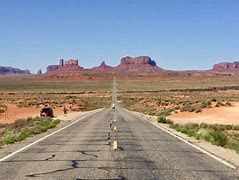
In the desert we can search for God; avoid of our
distractions and find Him. In the desert we can write out our sins and confess
them to God. In the desert we can shed our old lives like the snake sheds its
skin and find a new perspective for life. It is during this time alone with; He
that IS; we make a spiritual change of clothes. In the desert we can make an
all-night vigil and with the coming of the new day we can proclaim as in the
Negro spiritual: When I fall on my knees with my face to the rising sun, O
Lord, have mercy on me. For it is in the desert that we can quit deluding
ourselves and be doers of the word and not hearers only. For it is in the
desert with can find the strength to keep ourselves unstained by the world and
find that pure and undefiled religion is to care for others in their
afflictions.
Chapel of the Holy Cross[2]
The chapel was inspired and commissioned by local rancher and sculptor Marguerite Brunswig Staude, who had been inspired in 1932 by the newly constructed Empire State Building to build such a church. After an attempt to do so in Budapest, Hungary (with the help of Lloyd Wright, son of noted architect Frank Lloyd Wright) was aborted due to the outbreak of World War II, she decided to build the church in her native region. The chapel is built on Coconino National Forest land; the late Senator Barry Goldwater assisted Staude in obtaining a special-use permit. The construction supervisor was Fred Courkos, who built the chapel in 18 months at a cost of US$300,000. The chapel was completed in 1956. The American Institute of Architects gave the Chapel its Award of Honor in 1957. In the sculptor's words, “Though Catholic in faith, as a work of art the Chapel has a universal appeal. Its doors will ever be open to one and all, regardless of creed, that God may come to life in the souls of all men (and women) and be a living reality.” In 2007, Arizonans voted the Chapel to be one of the Seven Man-Made Wonders of Arizona, and it is also the site of one of the so-called Sedona vortices (New Age Pagan stuff).
Today go on a hike
pray for those afflicted with the Spirit of the world and for our Priests and
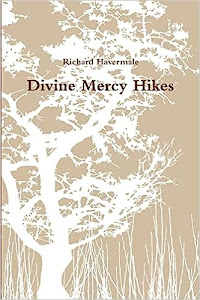
religious. Below is the link for my hiking meditation: feel free to use it to
go out to a deserted place to pray for those you care about.
Copilot’s
Take
What the desert ultimately exposes is the quiet truth we spend most of our lives avoiding: evil is not first “out there,” but crouched at the thresholds of our own habits, compromises, and unexamined desires. Wandering becomes holy when we stop pretending and start confronting.
The wilderness teaches that God does not remove the serpents, the sharp stones, or the long distances; instead, He trains us to walk with a steadier step, to discern the hiss of the tempter from the whisper of the Spirit, and to recognize that every hardship becomes material for the road He is building beneath our feet. The desert is where we stop negotiating with the world’s illusions and begin consenting to God’s reality.
And
places like the Chapel of the Holy Cross remind us that confrontation is not
always loud. Sometimes it is a Cross anchored into the spine of the earth, a
quiet defiance carved into stone. When you hike today, let the landscape teach
you how to stand: not as a man bracing for battle, but as one who has already
surrendered to the only One who conquers. Pray for those who have forgotten who
they are, for priests who carry the weight of spiritual combat, and for the
courage to let God strip away whatever keeps you from being fully His. The
desert does not merely reveal evil — it reveals the strength God gives to face
it.
Sts.
Francisco & Jacinta Marto[3]
Between May 13 and October 13, 1917, three children, Portuguese shepherds from Aljustrel, received apparitions of Our Lady at Cova da Iria, near Fatima, a city 110 miles north of Lisbon. At that time, Europe was involved in an extremely bloody war. Portugal itself was in political turmoil, having overthrown its monarchy in 1910; the government disbanded religious organizations soon after. At the first appearance, Mary asked the children to return to that spot on the thirteenth of each month for the next six months. She also asked them to learn to read and write and to pray the rosary “to obtain peace for the world and the end of the war.” They were to pray for sinners and for the conversion of Russia, which had recently overthrown Czar Nicholas II and was soon to fall under communism. Up to 90,000 people gathered for Mary’s final apparition on October 13, 1917. Less than two years later, Francisco died of influenza in his family home. He was buried in the parish cemetery and then re-buried in the Fatima Basilica in 1952. Jacinta died of influenza in Lisbon, offering her suffering for the conversion of sinners, peace in the world and the Holy Father. She was re-buried in the Fatima Basilica in 1951. Their cousin, Lucia dos Santos, became a Carmelite nun and was still living when Jacinta and Francisco were beatified in 2000. Sister Lucia died five years later. The shrine of Our Lady of Fatima is visited by up to 20 million people a year.
Pardon
Prayer taught by the Angel of Peace to Jacinta, Francisco, and Lucia in Fatima
during his first apparition in 1916.
Prayer:
My
God,
I believe, I adore, I hope and I love Thee!
I beg pardon for those who do not believe, do not adore, do not hope, and do
not love Thee.
Amen.
This
prayer was given by the Angel of Fatima to Lucia, Francisco and Jacinta.
Prayer:
Oh Most Holy Trinity,
Father, Son, and Holy Spirit,
I adore Thee profoundly.
I offer Thee the most precious Body, Blood, Soul and Divinity
of Jesus Christ, present in all the tabernacles of the world,
in reparation for the outrages, sacrileges and
indifferences by which He is offended.
By the infinite merits of the Sacred Heart of Jesus
and the Immaculate Heart of Mary,
I beg the conversion of poor sinners.
Amen.
February 20th Bls. Francisco Marto & Jacinta Marto[4]
- October
13th - The Miracle of the Sun
- Dancing
Sun Cupcakes
- Portuguese Dish for Our Lady of Fatima
- Spinning
Sun Cake
- Fatima
Miracle of the Sun Fruit Platter
Bible in a Year Day 233
Fr. Mike reflects on Jeremiah’s sorrow for the people of
Israel while reminding us that the one thing we ought to find glory in, is in
understanding and knowing God. In our reading of Ezekiel, we hear about God's
ongoing promise to restore Israel. Today’s readings are Jeremiah 9, Ezekiel 39,
and Proverbs 15:1-4.
Fitness Friday[5]
Top 10 Health and Fitness Tips from George
Washington
George
Washington was a man fit to be king. In fact, he was offered the crown by the
victorious Americans after the cessation of the American War of
Independence. He was one of the richest men in colonial America and a
successful general who commanded a great deal of respect and followed the
teachings of the Age of Enlightenment. While George refused to rule as a king,
he was less hesitant to share his insights on matters relating to health,
wealth, and politics. “I hope I
shall possess firmness and virtue enough to maintain what I consider the most
enviable of all titles, the character of an honest man.” George Washington
·
Health Should Be a Top Priority
President
George Washington believed that our health should be one of the most important
priorities in life. President Washington really knew the value of health in our
lives. Because without our health, it’s almost impossible to live life to the
fullest. In order to enjoy and carry out day-to-day tasks, we need to be able
to walk, breathe on our own, lift objects, have fun and so much more. Shortly
before his passing, the former President wrote that “Health was amongst (if not
the most) precious gift of Heaven, and without it we are but little capable of
business, or enjoyment.”
· Be An Active & Healthy Leader
Not many know that George
Washington was actively involved in the military, serving for a span of over 40
years. It was his heroic and strategic service in the United States
military where he became known as the Father of our Country. While in the
military, George Washington was constantly on his feet, leading his people
through battles, and persevering under pressure. Leadership is known to be
associated with improved relationships, increased mood, positive outlook,
increased self-confidence, and many more positive attributes. If you want to
impact the health of other people, as well as yourself, then it’s best to lead
by example. The types of social, emotional, and mental health benefits that
being a leader can bring are endless!
- Get Fit for Life’s Battles
According to the record
books, George Washington was a strong, well-built man. He grew up with an
athletic frame and with a 6’2 stature, he was described by his military
partner as “175 pounds paddles with well-developed muscles, indicating great strength.”
Another description of him by historian David McCullough explains how he stood
out as a soldier and general for his strapping appearance. This type of build
really helped him out when he had to fight his opposers or climb the Natural
Bridge. Whether Washington was riding a horse for hours on end, or getting
pierced by 4 musket balls, his great strength aided him through it all. You
never know what daily battles you might have to face, but lifting weights is always a huge
advantage to face what lies ahead!
- Eat A Variety of Healthy
Foods
America’s
first President was able to enjoy many different cuisines because he
was so wealthy. He ate fish such as sturgeon, along with many
different fruits like cherries, and protein packed nuts. George Washington was
fortunate to own many farms and facilities that enabled him to consume plenty
of nutrient rich foods. Though you don’t have to be rich to be healthy! Fruits,
vegetables, and different sources of protein can be bought at reasonable
prices. These foods are jam-packed with nutrients that protect the heart
against certain diseases, cancers and even strokes. They also aid in muscle growth
and repair while strengthening the immune system.
- Get Active Outside
George Washington took an
interest in farming and American agriculture very early on. He was passionate
about making the agriculture industry better for his people. This included a
lot of rehabilitation on his farm on Mount Vernon. Although he wasn’t the one
actually doing the farming, we can still learn from the health benefits that
comes with this activity. Farming and gardening contribute to mental clarity and
stress relief. According to the CDC, physical benefits associated with this
moderate-intensity activity contribute to reductions in obesity, diabetes, high
blood pressure, depression, osteoporosis, and colon cancer.
- Adopt A Furry Friend
Did you know that George
Washington loved dogs and bred them? His journals were infused with numerous
breeding accounts that included his own special “Virginia Hound” breed. Using
these dogs, he indulged sometimes two or three times a week in one of his favorite
pleasures: fox-hunting. Having a furry companion by your side greatly
influences your health in many ways from boosting the immune system to
increasing your quality of life. Take a look at all of the health and
fitness benefits of owning a furry friend here!
- Go Dancing!
Not only did George
Washington like to move on the battlefield, but he liked to get down on the
ballroom floor too. During the American Revolution, balls were often held where
the General “danced upwards of three hours without once sitting down,” General
Greene stated in 1779. He was seen gracefully dancing with elation spread
across his face. It’s no wonder that he was so content since dancing is known
to boost mood and confidence! Dancing has many physical and mental health
benefits. Those include improved heart and lung function, muscle tone,
strength, endurance, as well as stronger bones, improved balance and social
skills. Learn how busting a move can be incredibly beneficial to your
health here!
- Read A New Book
We all know the peaceful
effects that reading can have on us during a rainy day. But surprisingly, reading has a lot of other health benefits
for the average Joe. George Washington was an avid reader in his day. Owning
more than 1,200 books, he turned to them to improve his political,
militant, and agricultural prowess. You could say George Washington was
self-educated from all the time he spent gathering the important information
that made him so successful. According to York University researchers, reading
helps boost brain power and memory, reduce stress, increase longevity, and even
create feelings of empathy. So pick up a good book to expand your
knowledge and increase your imagination!
- Be Social
We all know how much
healthy friendships benefit our mental health by keeping us happy and
healthy. Not only was George Washington great at running the country, but
he was an excellent communicator. He loved having company over for parties
as well as connecting with the ladies! Besides dancing, you could find him
engaging in meaningful conversations with his companions throughout
the night. Many studies show that having people to connect
with can keep your brain sharp and enrich your life by adding years to it!
Friends also reduce stress, decrease risk of stroke, and can help beat the
common cold!
- Always Persevere
One of the most honorable
things about former President George Washington was the fact that he was a man
of character. His self-control in such a challenging time
period allowed him his courage to shine through on the battlefield.
He persevered under pressures of militant lifestyle, while keeping his
integrity intact. Even though he failed many times, he stayed positive and kept
pushing through. Resilience has a way of impacting our health for the better,
and is especially required when things get tough. By staying positive and
moving forward we improve our emotional, mental, and physical health.
Happy emotions contribute to a healthier immune system! Not to mention the
personal benefits such as increased confidence, motivation, and success.
Do
not be afraid of those who kill the
body but cannot kill the soul; rather, be afraid of the one who can destroy
both soul and body in Gehenna.
Daily Devotions
·
Unite in the work of the Porters of St. Joseph by joining them
in fasting: Today's Fast: Reparations
for offenses and blasphemies against God and the Blessed Virgin Mary
·
Offering to
the sacred heart of Jesus
·
Make
reparations to the Holy Face
·
Rosary
[5]https://www.healthfitnessrevolution.com/top-10-health-fitness-tips-george-washington/
[6] Sheraton, Mimi. 1,000 Foods
To Eat Before You Die: A Food Lover's Life List (p. 892). Workman Publishing
Company. Kindle Edition.






Comments
Post a Comment