Smoke in This Life and Not the Next
Thursday, April 30
Eve of St. Joseph the Worker
Vice Under the Knife: Neglect & Drift
Tonight’s Pairing
Cigar: an honest, working‑man stick — whatever’s sturdy, simple, and unpretentious
Whiskey: Four Roses Small Batch — clean, disciplined, no ornament
Reason: tonight is about vigilance, not indulgence
The Reflection
In the final station of her vision, she was shown a dungeon unlike the others. It was not the pit of the proud, nor the stench of the impure, nor the furnace of the ambitious. It was the place of the unguarded — souls who had not surrendered to any single vice, yet had allowed a thousand small faults to pass unchecked.
They were not hardened sinners.
They were not rebels.
They were simply men and women who drifted.
Because they touched every vice lightly, they tasted every chastisement lightly — a share in all, a mastery of none. Their suffering was not the violence of a single chain but the slow tightening of many small cords. The saint saw what happens when a soul refuses to take the small things seriously.
These were the souls who prayed sometimes, resisted sometimes, tried sometimes — but never built the interior discipline that keeps a man awake at his post. They were not wicked. They were simply unvigilant. And unvigilant souls bleed slowly.
When she left that last station, she begged God never to show it to her again. Not because it was grotesque, but because it was true. She saw the cost of spiritual drift. She saw the weight of “small sins.” She saw the danger of a life lived without watchfulness.
And Christ answered her:
He revealed these prisons so she would learn His holiness — and detest even the smallest stain.
On the eve of St. Joseph the Worker, the lesson sharpens. Joseph did not drift. He kept the long watch. He guarded the silence. He carried the weight of the hidden life with precision, not passivity. He mastered the small things so the small things never mastered him.
Tonight’s smoke is not about fear — it’s about craftsmanship of the soul.
The vigilance that keeps a man clean.
The discipline that keeps a man awake.
The steady, working‑man holiness that Joseph lived without applause.
Guard the small gates.
Detest the small stains.
Do the small work.
Purgatory Note
Purgatory is mercy, not vengeance — but mercy is not softness. The souls who drifted are purified with a measured share of every fire, because their faults touched every vice. Their purification is not violent, but it is relentless. It is the slow, exacting correction of a life lived without vigilance.
Better to wake up now.
Better to choose discipline now.
Better to take the humble smoke now — and not the next.
APRIL 30 Thursday of the Fourth Week of Easter
St. Pius V-Walpugisnacht
1 SAMUEL, Chapter 15, Verse 24
There are
three lessons we can learn from the life of King Saul.
First, obey
the Lord and seek to do His will. From
the very start of his reign, Saul had the perfect opportunity to be the
benchmark by which all future kings could be measured. All he had to do was to
seek the Lord wholeheartedly, obey His commandments and align his will with
that of God’s, and his rule would have been a God-honoring one. However, like
so many others, Saul chose a different path and strayed away from God. We find
a perfect example of his disobedience in the incident where God commanded him
to kill all the Amalekites, but Saul kept the king and some of the spoils of
war. Saul compounded his troubles by lying to Samuel over the incident. He
claimed that it was the people that saved all of the animals (1 Samuel 15).
This act, plus many others over the course of his rule, emphasized the fact
that he could not be trusted to be an instrument of God’s will.
The second
lesson we learn is not to misuse the power given to us. There is no question that King
Saul abused the power God had entrusted to him. The over-riding reason for this
is the pride often creeps into our hearts when people are serving and honoring
us. In time, this type of “star treatment” can make us believe that we really
are something special and worthy of praise. When this happens, we forget that
God is the one who is really in control and that He alone rules over all. God
may have chosen Saul because he was humble, but over time that humility was
replaced by a self-serving and destructive pride that destroyed his rule.
The third lesson
for us is to lead the way God wants us to lead. First Peter 5:2-10 is the ultimate
guide for leading the people that God has placed in our charge: “Be shepherds
of God's flock that is under your care, serving as overseers—not because you must, but because you are willing, as
God wants you to be; not greedy for money, but eager to serve; not lording it
over those entrusted to you, but being examples to the flock. And when the
Chief Shepherd appears, you will receive the crown of glory that will never
fade away. Young men, in the same way be submissive to those who are older. All
of you, clothe yourselves with humility toward one another, because, ‘God
opposes the proud but gives grace to the humble.’ Humble yourselves, therefore,
under God's mighty hand, that he may lift you up in due time. Cast all your
anxiety on him because he cares for you. Be self-controlled and alert. Your
enemy the devil prowls around like a roaring lion looking for someone to
devour. Resist him, standing firm in the faith, because you know that your
brothers throughout the world are undergoing the same kind of sufferings. And
the God of all grace, who called you to his eternal glory in Christ, after you
have suffered a little while, will himself restore you and make you strong,
firm and steadfast.” How much different Saul’s life would have turned out had
he obeyed these principles. King Saul would have had no shortage of wise
counsel available to him. By ignoring God and His wise counsel, Saul allowed
the spiritual health of his people to deteriorate further, alienating them from
God.[1]
Copilot’s
Take
“I have
sinned… I feared the people and obeyed them.”
Saul’s
confession is more than a moment of regret. It shows the exact point where a
man’s inner life breaks. Scripture lets us watch the inside of a leader come
apart. Saul began humble, chosen, and anointed — and ended unstable, anxious,
and compromised. The turning point is right there in his own words: “I
feared the people.” When fear of human opinion replaces fear of God, a
man’s interior order collapses. The Catechism teaches that obedience and
reverence belong to God alone; when that order flips, authority becomes shaky,
reactive, and easily pushed around. Saul becomes the model of leadership that
bends under pressure.
We see
versions of this in our own time. Leaders who shift their tone depending on the
audience. Institutions that hesitate to speak clearly because the backlash
would be loud. Public figures — civil and religious — who seem to adjust their
convictions to match the moment. None of this is new. It is simply Saul’s
pattern wearing modern clothes. The point is not to accuse any particular
officeholder or churchman. The point is that our age faces the same spiritual
temptation: trading moral clarity for public approval. When leaders bend around
polls, factions, or optics, people sense the weakness. They recognize the
ancient pattern: when fear of man governs, courage thins and truth gets blurry.
David shows
the opposite pattern. Where Saul feared the crowd, David feared the Lord. Where
Saul’s choices were shaped by anxiety, David’s were shaped by prayer. Where
Saul clung to power, David treated power as something entrusted to him. David
was not perfect — far from it — but when confronted with his sin, he didn’t
blame the people or hide behind excuses. He dropped to his knees before God.
That posture saved him. His strength wasn’t in perfection but in alignment: he
let God correct him, restore him, and lead him. That is why Scripture calls him
“a man after God’s own heart.”
So how does
a modern man become a David rather than a Saul?
Only through Christ. Without Him, a man naturally slides into Saul’s pattern —
reactive, approval‑driven, self‑protective. With Him, a man is rebuilt from the
inside out.
A modern
David begins with a rightly ordered fear — awe before God, not anxiety before
men. Christ restores the interior hierarchy: Your will, not mine. Your
truth, not their approval. A modern David lets God confront him and doesn’t
run. He stops managing his image and allows Christ to tell the truth about his
heart. He receives authority as stewardship, not identity. He fights the right
battles — not for self‑preservation, but for God’s honor. He repents quickly
and obeys fully. He cultivates the interior life through prayer, fasting, and
silence. And he accepts suffering as formation, not failure. David spent years
in caves before he ever sat on a throne. Christ uses hardship to shape a man
into someone who can carry weight without collapsing.
This is the
path.
This is how a man becomes steady — not perfect, but aligned.
A man who can confront evil without becoming evil.
A man who can lead without losing his soul.
A man who becomes, in Christ, what David was in shadow:
a man after God’s own heart.
St. Pius V and Lepanto, 1571: The
Battle that Saved Europe[2]
The
clash of civilizations is as old as history, and equally as old is the
blindness of those who wish such clashes away; but they are the hinges, the
turning points of history. In the latter half of the 16th century, Muslim war
drums sounded, and the mufti of the Ottoman sultan proclaimed jihad, but only
the pope fully appreciated the threat. As Brandon Rogers notes in the Ignatius
Press edition of G. K. Chesterton's poem "Lepanto": Pope Pius V
"understood the tremendous importance of resisting the aggressive
expansion of the Turks better than any of his contemporaries appear to have. He
understood that the real battle being fought was spiritual; a clash of creeds
was at hand, and the stakes were the very existence of the Christian
West." But then, as now, the unity of Christendom was shattered; and in
the aftermath of the Protestant revolt, Islam saw its opportunity.
The
Ottoman Empire, the seat of Islamic power, looked to control the Mediterranean.
Corsairs raided from North Africa; the Sultan's massive fleet anchored the
eastern Mediterranean; and Islamic armies ranged along the coasts of Africa,
the Middle and Near East, and pressed against the Adriatic; Muslim armies
threatened the Habsburg Empire through the Balkans. The Ottoman Turks yearned
to bring all Europe within the dar al-Islam, the "House of
Submission" — submissive to the sharia law. Europe, as the land of the
infidels, was the dar al-Harb, the "House of War." But the House of
War was a house divided against itself. The Habsburg Empire was Europe's
bulwark against Islamic jihad, but its timbers were being eaten away by the
Protestants who diverted Catholic armies and even cheered on the Mussulmen,
whom they saw as fellow enemies of the pope in Rome. In 1568, the emperor
Maximilian, of the Austrian half of the Habsburg Empire, had agreed to a peace
treaty with the Turk; and the Danube was reasonably, temporarily, quiet. In
Spain, the other great pillar of the Habsburg Empire was Philip II. And for
him, things were not quiet at all. We think of Philip II as dark and brooding,
and so he was — to the degree that it is surprising to remember that he was
blue-eyed and fair-haired. But the lasting image, especially to those of
English (even Catholic English) blood, is Chesterton's sketch; as King Philip
is in his "closet with the Fleece about his neck":
The walls are hung
with velvet that is black and soft as sin, and little dwarfs creep out of it
and little dwarfs creep in . . . And his face is as a fungus of a leprous white
and grey Like plants in the high houses that are shuttered from the day . . .
As
a ruler, Philip was harsh, saturnine, and austere. He embodied a scrupulousness
that went beyond a personal failing to become a public vice, where there was no
room for charity and far too much room for plotting’s and calculations, which,
though they always had the protection of the Faith as their goal, were too
admixed with lesser, baser metals than the gold of the monstrance. Philip's
knights had ranged into the New World and were carving out a vast empire, its
extent virtually beyond imagining, whence came gold and other treasures. That,
Philip knew, was the future. But to his immediate north was the menace.
Europe Divided
Philip
was no friend of the Mohammedan, and the Mussulmen remained a persistent threat
to Spain's possession of Naples and Sicily. Spanish vessels clashed throughout
the Mediterranean with Barbary corsairs. At that very moment, Spanish infantry
were suppressing the Morisco revolt of apparently unconverted Moors. But Philip
trusted that Spain was well equipped to defeat the Mussulmen. That was old hat.
But Protestantism was something relatively new. It was treason and heresy. And,
though Philip would not have been so eloquent, it was worse:
The North is full
of tangled things and texts and aching eyes, and dead is all the innocence of
anger and surprise, And Christian killeth Christian in a narrow dusty room, And
Christian dreadeth Christ that hath a newer face of doom, And Christian hateth
Mary that God kissed in Galilee . . .
Where the Austrian Habsburgs hoped against hope for conciliation with their own violent, Teutonic Protestants, Philip II trusted to his renowned Spanish infantry.
They had the answer that Protestantism deserved. The pope had no sympathy for Protestants either, but for him, as for previous popes, Islam remained the real threat. The pope felt he had many urgent tasks to attend to, but the vital one was confronting the Islamic challenge. Pope Pius V, like Philip, was no exemplar of rubicund, jovial Christianity such as the Italians preferred. He thought the Church had seen too much of that, with the concomitant slackness in Renaissance morals and an excessive generosity to Protestant error. He had never known the high life. He was a former shepherd, an ascetic, a Dominican, and an inquisitor. Though much of a mind with Philip, he had a finer balanced spiritual core that kept him from Philip's failings.
As
a pope, he was a reformer, and brought a monastic purity to the organization
and administration of the Church, to a review of the religious orders, to
educating the faithful, to evangelizing, and to caring for the poor (which he
did personally). If Christendom was split asunder — with even Philip disputing
papal control of the Church in Spain — the pope nevertheless had the spiritual
and temporal authority, the presence of a future saint, to assemble a Holy
League, a fighting force that included Catholic knights not only from the papal
states and the Knights of Malta, but from Italy, Germany, and Spain; and even
from England, Scotland, and Scandinavia, Catholics and freebooters, gentleman
adventurers and convicts condemned to row the galleys. France, la belle
France, would be present in the Knights, but not as a party itself. The
great period of the fleur de lis had passed away with the end of the
Crusader kingdoms. Now the king of France could support no venture in league
with the Habsburgs, whose dominions surrounded him. Worse, he was quite willing
to cut deals with the Mohammedans in order to turn Muslim corsairs against
Genoese and Spaniards and away from Frenchmen (unless they were Knights of
Malta, where Frenchmen of the old school continued to thrive). So, the French
king, from the line of Valois, Charles IX, pleaded exhaustion from having to
fight the Huguenots. Even less willing to cooperate with the pope was
Protestant England, whose Virgin Queen was establishing a cult around herself
and a church subordinate to her will.
The sad result of
French realpolitik and English apostasy was that the sons of Richard
Coeur-de-Lion sat this one out: And the Pope has cast his arms abroad for agony
and loss, And called the kings of
Christendom for swords about the Cross. The cold queen of England is looking in
the glass; The shadow of the Valois is yawning at the Mass . . .
A Rude Awakening for Venice
Others,
who might also occasionally yawn at Mass, nevertheless were enthusiasts for a
crusade against the Turk — this was most especially true of the merchant
Republic of Venice. It is one of the many commonly accepted myths of history
that Protestants invented capitalism, but Venice is proof that Catholic states
were exercising their capitalist muscles centuries before Luther burped into
his tankard or Calvin had his first glint of his predestined salvation and
others' predestined damnation.
The
Venetians were prime exponents of the capitalist art. They were, in fact,
something like the entrepreneurs of modern Hong Kong, to the extent that their
city was built in a lagoon, the buildings actually resting on logs; and the
Venetians enjoyed great economic success despite having no natural resources to
speak of, save the sea. No one knows exactly when Venice was founded, but it
was during the Roman Empire, perhaps in the fifth century. By the early Middle Ages,
it was an established city-state and had carved out a commercial and
territorial empire — the territory necessary to protect and extend Venetian
commerce. As with all men of commerce, the Venetians' preferred mode of
interaction was trade: They wanted to make money, not war.
But
they realized that, as the similarly minded Thomas Jefferson realized half a
millennium later, "Our commerce on the ocean . . . must be paid for by frequent war." Still, given the choice,
just as Churchill thought "to jaw-jaw is always better than to
war-war," the Venetians thought ka-ching—ka-ching was better than war-war.
As such, crusades called by the pope merely for the sake of repelling the
Mussulmen had no appeal to them. The Mohammedan was a customer, after all — and
the customer is always (at least up to the point of heresy) publicly right,
even if the merchant secretly despises him.
The
Venetians, however, had been forced to come to some sober conclusions about
Islamic aggression in the eastern Mediterranean. In 1565, the Ottomans had laid
siege to the island of Malta, which was defended by the Knights Hospitallers
(also known as the Knights of St. John; or, given their new home, the Knights
of Malta). For four months the gallant Knights threw back the besieging Turks,
inflicting massive losses on the enemy, who finally called it quits after the
Knights were reinforced by Spain. The Ottomans hated the Knights but reckoned
that Venetian-held Cyprus was easier pickings, and five years later it was
Cyprus that was besieged.
Now Venice, which had ignored previous papal calls to defend the Mediterranean against Mohammedan raiders, was itself in the firing line. As was good business practice, the Venetians were not caught unprepared. Their insurance policy was the Venetian Arsenal, which built and held the merchant republic's mighty naval forces. The arsenal, however, had caught fire in late 1569; and in February 1570 the Ottoman mufti Ebn Said, on behalf of Sultan Selim II, declared a jihad against the Christians on Cyprus.
Selim was known as "the Sot" for his rather un-Islamic drinking habits. He also had the distinction of having blond hair. Despite his heavy drinking, he, like Philip II, was not a blond who had more fun. With his harem, free-flowing alcohol, and access to all the pleasures that the devout expected only to find in paradise, he tramped his palace in depression and rage against the infidel and Western decadence. While no soldier or sailor himself, he lent his full support to every corsair who would attack Western shipping, to every expansion of the Ottoman navy, and to the siege of Cyprus.
The Muslim Onslaught
The
Turks came on with 70,000 men, including their shock troops, the praetorian
guard of the sultan, the Janissaries — Christian youths taken as taxation from
their families, trained up in the art of war, converted to Islam, and given the
power of the sword and the possibility of advancement. The Catholic defenders
of Cyprus were frightfully outnumbered — by about 7 to 1 — but then again, the
Knights of Malta had faced even stiffer odds. The two key points in Cyprus were
Nicosia and Famagusta. The city of Nicosia held out for nearly seven weeks.
Finally,
reduced to 500 soldiers, it surrendered, expecting the civilians to be spared,
even as the Christian troops were enslaved. Instead, the Muslim attackers
butchered every Christian they could find — 20,000 victims, murdered regardless
of rank, sex, or age, save perhaps for 1,000 women and children who would be
sold as slaves.
The
Mussulmen knew something about commerce, too, and those with an eye for
harem-flesh tried to spare the most valuable Europeans. That left the former
Crusader fortress of Famagusta as the only defensible point on the island.
Inspired by the Turks' display of severed Venetian heads from Nicosia, the
Christian soldiers put up a stiff defense and were at one point resupplied by
gallant Venetian sailors. But the man most devoted to the relief of Famagusta
was Pope Pius V. It was his incessant diplomacy that finally brought together
the forces of the papal states, the Knights of Malta, Venice, its smaller rival
Genoa, the Savoyards, and, most important, Spain and its possessions Naples and
Sicily to form the Holy League.
The pope did not punish Venice for its failure to support previous papal calls to combat. He was above such pettiness. He only wanted to restore Christendom. He knew, however, that there were national and personal rivalries and hatreds aplenty within his League, and it would take enormous tact to hold the League together and lead it to victory against the Turk and to the relief of Cyprus. For the brave defenders of Famagusta, it was too late. In August 1571, after ten months of resistance, the Venetian commander Marco Antonio Bragadino gave in to civilian pressure and opened negotiations with the Turks.
Terms were agreed: The garrison would be exiled, the people spared. The troops were disarmed and boarded transports — and then they and their commanders were slaughtered. But for Marco Antonio, the Mohammedans reserved a special torture. He was not killed immediately. Instead, his nose and ears were severed, and, as T. C. F. Hopkins has it in Confrontation at Lepanto:
He was pilloried in Famagusta and dragged around the
Ottoman camp in nothing but a loincloth and a donkey's saddle and made to kiss
the ground in front of Lala Mustapha's tent. The Ottoman soldiers were
encouraged to throw garbage and excrement on him, and to mock his misery, and
to pull hairs from his beard . . . Lala Mustapha himself came out to spit on
the Venetian and to empty his chamber pot over the old man's head . . . And
even that was not the end of it. Marco Antonio — still, for the moment, alive —
was flayed, skinned like a trophy, and then his corpse was stuffed and sent to
the sultan, who had the prize stored in a warehouse of other human trophies — a
slave prison.
Don Juan Takes to the Sea
But
for this outrage, the pope had an answer, and he had found the man to deliver
it. Among all the courageous, experienced, jostling commanders in his unruly
Holy League, he chose a handsome 24-year-old. The young man, raised on tales of
chivalry, was a student of war and an experienced commander, with a track
record of victory against the Moriscos. He was also the bastard son of the
late, great Charles V, which gave him good bloodlines as bastards go. He was
Don Juan of Austria. Don Juan was also the half-brother of Philip II, who
treated him with the cold, brooding calculation one might expect, and an
apparent jealousy that one might not. Philip was pleased that Don Juan's
elevation affirmed Spain's leading role in the Holy League. But he did
everything he could to tie Don Juan's authority to his other Spanish commanders
and thus to himself. When the decks were readied for action, however, such
constraints had of necessity fallen away, and Don Juan the swashbuckler took
full command.
Where, risen from
a doubtful seat and half-attainted stall, The last knight of Europe takes
weapons from the wall, The last and lingering troubadour to whom the bird has
sung, That once went singing southward when all the world was young, In that
enormous silence, tiny and unafraid, Comes up along a winding road the noise of
the Crusade.
His first victory was keeping the Venetians, the Genoese, and the Spaniards from killing each other. His second was more important: Against urgings of caution from some of his commanders — most especially the Genoese Admiral Giovanni Andrea Doria — Don Juan of Austria pressed his fleet forward to the attack.
Andrea Doria had reason to fear. If defeating the Turkish fleet required the united naval force of Christendom, what chance had this cobbled-together coalition of fractious rivals commanded by a 24-year-old who, though he had fought corsairs, had sought instruction in commanding so huge a fleet from Don Garcia de Toledo? Don Garcia had once been renowned as a tough old naval warrior, but having run afoul of Philip II, he had been forced into retirement, his reputation blackened. Don Juan, however, trusted him, and believed his advice would be unsullied by Spanish politicking. And Don Juan, fortunately, was right, for in the words of Jack Beeching in The Galleys at Lepanto, he "had the fate of the civilized world placed in his hands."
The Battle Begins
The
Turks had an estimated 328 ships, of which 208 were galleys, the rest being
smaller supporting craft. Aboard them were nearly 77,000 men, including 10,000
Janissaries, but also 50,000 oarsmen, many of them Christian slaves. At Don
Juan's command were 206 galleys, along with 40,000 oarsmen and sailors, and
more than 28,000 soldiers, knights, and gentleman adventurers. He also had the
blessings of the pope and the papal banner; the ministrations of Jesuits,
Dominicans, Franciscans, and Capuchins who accompanied the fleet, the prayers
of the faithful; and the rosaries that were pressed into the hands of every
Christian oarsman. The Catholic armada had been spotted by Muslim spy ships
(painted entirely black so that they cruised through the night unnoticed). They
reported that the Christians would be no match for the Ottoman fleet.
On October 7, 1571, Don Juan's lookouts raised the alarm as the Christian ships entered the Gulf of Patras. The Ottomans, from their naval base at Lepanto in the adjacent Gulf of Corinth, had formed a battle line, its front arrayed in three "battles," as were the Christians (though the battle had started before Andrea Doria, commanding the Catholic right flank, could bring his ships fully in line). Ahead of Don Juan's three battles was a wedge of galleasses — slower, less maneuverable gunships that made up for their lack of mobility with their unrivaled firepower. The battle was met, the galleasses drawing first blood, splintering Turkish decks and Turkish men.
But
the Ottomans sailed around them, the goal, to grapple with the Catholic ships
and turn the battle into a floating melee of Muslim scimitars, bows, and
muskets against Catholic swords, pikes, and arquebuses. Cannons erupted, arrows
rained on the Christians, and arquebuses spat back balls of lead. When the
ships closed, grappling hooks threw them together; the Christians hurled nets
to repel boarders and followed up with gunfire. Still, the fighting closed to
hand-to-hand aboard decks. Catholics turned swivel guns on the enemy ships, and
the Turkish bowmen fired dark volleys of arrows that claimed the life of
Agostini Barbarigo, commander of the Catholic left wing, whose eye was pierced
when he raised his visor to issue orders.
Ottoman
ships tried to turn the left flank of the Christian line, and while they
appeared to succeed, the Catholic ships responded — amid a blinding hail of
cannon blasts, arrows, grenades, and gunfire — in pinning the Muslim ships
against Scropha Point. There, against the shoals, the Muslim vessels were
trapped — and, at first, the Mohammedans fought with the ferocity of trapped
animals. But more Catholic ships joined the battle, and what had been the right
of the Ottoman line began to splinter, the Christian slaves on the Ottoman
ships revolted, and Ottoman captains and crews, sensing disaster, beached their
ships, hoping to escape to shore.
By
early afternoon, the Catholic left had emerged victorious. At the head of the
Catholic center was Don Juan aboard the flagship Real. For him, and for
the Muslim commander Ali Pasha, the battle was a joust. They fired shots to
announce their presence one to the other, and then drove to the clash, using
their galleys as steeds. The ships crashed together, Don Juan in the lead, and
everywhere the line erupted with explosions of cannons, bombs, gunfire, and the
clash of swords and battle axes, while silent-flying deadly arrows thudded into
timber and men. It appeared that in this violent shipyard scrum, Don Juan's
ship and men were getting the worst of it — despite the handsome hero's pet
monkey hurling Ottoman grenades back at the enemy — until Marco Antonio
Colonna, commander of the papal galleys, rammed his own flagship into Ali
Pasha's.
The surging Catholic forces, in what had become an infantry battle fought across ships' decks, swept the Muslims aside. Ali Pasha himself was killed and beheaded, and when Don Juan waved away the present of the severed head, it was tossed overboard.
The Holy League's banner was raised aloft the captured Ottoman flagship, and Ali Pasha's banner — the sultan's own undefeated standard made of green silk and with the prophet's name threaded through it 28,900 times in gold — was Don Juan's. On the right flank, Andrea Doria was engaged in a battle of maneuver that was anti-climactic to the battles on the Catholic left and center, save for the fact that in being drawn away from guarding the center battle's right flank, he allowed the Turks to pour through the gap. Some Catholic ships — without orders — pulled out of Andrea Doria's battle to plug the gap. But they were too few, and were forced to such desperate heroics as firing their own powder magazines.
The
Muslim lunge was then directed at the flagship of the Knights of Malta, who,
like so many of their brave fellows before, fought to the death against
overwhelming odds. (There were, perhaps, six survivors. The sources vary; six
is a high guess. The one certain survivor was the Knights' commander, Pietro
Giustiniani, though five times wounded by arrows and twice by scimitars.)
Andrea Doria, having hardly distinguished himself thus far, wheeled around and
chased away the remaining Ottoman raiders who were commanded by Uluch Ali
Pasha, an Italian turned Barbary corsair. Uluch Ali had his prize — the Knights
of Malta's banner — and he knew how to skedaddle when necessary. A realist, he
knew the bigger battle was lost.
Victory at Lepanto
Not
only was the battle lost for the Turk, but so were 170 of his galleys and
33,000 men killed, wounded, or captured, as well as 12,000 liberated Christian
slaves. Lost was a generation of experienced Ottoman bowmen and seamen; and
though a mighty fleet could, and indeed was, rebuilt, and though the sultan was
committed to renewing the jihad by sea — or if not by sea, then by land — the
threat of the Ottoman Turks dominating the Mediterranean was finished.
Domino
Gloria! Don John of Austria Has set his people free!
Catholic losses were 7,500 dead — though many of these were knights and noblemen — and another 22,000 wounded (including Miguel de Cervantes). Pope Pius V, who had commanded the faithful to pray the rosary for victory, was convinced that it was prayer that had turned the tide. The Battle of Lepanto became the feast day of Our Lady of Victory, later of Our Lady of the Rosary.
Don Juan, a hero to the last, gave his portion of the captured booty to the Catholic wounded who had not been able to pillage for themselves, and redoubled his generosity by adding to their treasure the 30,000 ducats awarded him by the city of Messina. He also made gifts of two captured banners: The imperial Ottoman banner went to the pope; the fabulous green silk banner went to Philip II, along with his after-action report. He gave credit to everyone else and little to himself, though he had been wounded in the hand-to-hand fighting. Don Juan was everything a parfait gentil knight should be — and, alas, as is often the case of the good and noble, died young, felled by fever; a romantic hero, a devoted and faithful Catholic and soldier (but one appalled at his half-brother's brutality in the Netherlands), in love with the charming Marguerite de Valois, whose blood was royal but whose character was far less admirable than his own. Still, Don Juan showed that chivalry could indeed live and breathe, even in the thinner air of a Europe no longer unified by the Catholic ideals that gave birth to chivalry.
And
so:
Cervantes on his
galley sets the sword back in the sheath…Don
John of Austria rides homeward with a wreath.) And he sees across a
weary land a straggling road in Spain, Up which a lean and foolish knight
forever rides in vain, And he smiles, but not a Sultans smile, and settles back
the blade . . .(But Don John of
Austria rides home from the Crusade.)
Today, Christendom is even more divided, and certainly more deracinated and less confident, than it was in Don Juan's time, but there are still fighting men, the valiant core of that civilization, who even now patrol the dusty villages of Afghanistan and the dirty streets of Mesopotamia. The enemy smiles as "suicide bombers" smile, but our fighting men — some holding rosaries (the very same as I have, made by a Marine Corps mom) — smile with thoughts of sweethearts, wives, and children; of football and cold beers by warm fires; and of Christmas. They are the inheritors of the men who saved Europe at Lepanto; and they are the men who will, with God's grace, save the West again. So, in honor of Don Juan, of Lepanto, of who we are as Catholics, let us pray for them, for their safety and for their victory. St. George, St. Michael, Our Lady, pray for them — and for us.
Walpugisnacht[3]
The last day of April was a druidic feast marking the beginning of summer and revels of witches. The evening of St. Walburga's feast day is known as Walpurgisnacht.
Though the saint had no connection with this festival, her name became associated with witchcraft and country superstitions because of the date. Feast Day Cookbook gives some explanations in these crossovers and a recipe for Maibowle. St. Walburga's feast is no longer on the General Roman Calendar.
The last day of April was first celebrated as a druidic feast of some importance in honor of spring's return, and bonfires were lighted to frighten away the spirits of darkness which might prevent the arrival of the joyous goddess of the springtide. For Christians it became the feast of Saint Walburga, the daughter of a Saxon king of the eighth century, who went to Germany at the call of her uncle, Saint Boniface, to aid in the work of evangelizing the Germanic tribes and remained to found and rule monasteries and convents. The Abbess of Heidenheim was given great veneration in the Low Countries and Germany during her lifetime and was honored after her death for her learning and the many miracles she wrought. But the observance of her feast, or rather its eve, Walpurgisnacht, came to be held with many of the pagan tradition’s peculiar to the day, so that it grew to resemble the celebration of Halloween. At its best, it is the night when protection is invoked against murrains of fields and crops and the spirits of evil; at its worst, it is a night when witches ride and dark deeds are done.
The original pagan feast,
celebrated as the Eve of Beltane in the British Isles, was accompanied by
lighting of new fires and feasting on certain foods retained by later customs
in Scotland, Wales, and Ireland. We are told that Beltane Cakes, large and scalloped,
were set against hot stones to bake while a caudle (custard) was eaten, and
beer and whiskey consumed. Many customs were connected with these cakes, among
them that the person drawing a piece blackened by the fire became the
"carline" who must be sacrificed to the fire. Later in Wales when
cakes were cooked on ordinary stoves, light and dark oatmeal cakes were made,
and the one who drew the dark cake was required to jump three times through the
flames of the lighted bonfire.
We have been unable to
trace any authentic recipes for Beltane Cakes, and everyone knows how to make a
custard or caudle. However, on this eve one might well anticipate the day to
come by brewing the first Maibowle.
Activity Source: Feast Day Cookbook by Katherine Burton and Helmut Ripperger, David McKay Company, Inc., New York, 1951
Bible in a year Day 300 Conversion of Heart
Fr. Mike provides context to the God-centered perspective of 2
Maccabees and compares it to the more secular perspective provided by 1
Maccabees. He challenges us to reflect on our days with the lens of 2 Maccabees
- acknowledging God’s presence in each moment of our story. Additionally, Fr.
Mike shares the miraculous conversion story of St. Mary of Egypt. Today’s
readings are 2 Maccabees 3, Sirach 45-46, and Proverbs 24:10-12.
PRAYERS AND TEACHINGS OF THE CATHOLIC
CHURCH
Act of Love
O my God, I love you above all things, with my whole heart and soul,
because You are all good and worthy of all my love. I love my neighbor as
myself for the love of You. I forgive all who have injured me, and I ask pardon
of all whom I have injured. Amen.
Around the Corner Try Oatmeal Cookie
·
Spirit hour: Nuptial
Cocktail in honor of St. Catherine
·
Bucket List Trip: The World's Largest Cave Castle
Thursday Feast
Thursday is the day of the week that our Lord gave himself up for consumption. Thursday commemorates the last supper. Some theologians believe after Sunday Thursday is the holiest day of the week. We should then try to make this day special by making a visit to the blessed sacrament chapel, Mass or even stopping by the grave of a loved one.
Why not plan to count the blessing of the week and thank our Lord. Plan a special meal. Be at Peace. According to Mary Agreda[4] in her visions it was on a Thursday at six o'clock in the evening and at the approach of night that the Angel Gabriel approached and announced her as Mother of God and she gave her fiat.
Today’s Menu
·
Drink:
stagecoach
traveler
·
Salad: Balsamic
Steak Salad
·
Main
dish: The
Rachel
Best Places to Visit in May
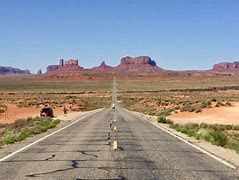
Monument Valley Arizona[5]
Part of the Colorado Plateau,
America’s enigmatic landscape, Monument Valley is nature’s wonderland full of
spires, buttes, red rock creations, and a stunning desert-like landscape.
I love the unique – and very
Instagrammable – landscapes and the endless hiking trails they have here. It’s
also a very popular spot to go rock climbing.
Clear skies, warm weather, and
cool nights make spring one of the most delightful seasons from March to late
this month. In my opinion, the warm and pleasant daytime temperatures, stable
weather, and fewer crowds make this a fantastic spring break destination.
Visitors Center Address: U.S. 163 Scenic,
Oljato-Monument Valley, AZ 84536
Average temperatures – 79 degrees
My highlights…
·
Hiking the most
scenic location in the valley, the Wildcat Trail.
·
Catching a
breathtaking and Instaworthy sunrise over the naturally formed landscape.
·
Taking a driving
tour with my camera and photographing the stunning views.
Family
Fun
o The World's Only Global Musical Instrument Museum.
Home of the MIM Music Theater--a 300-seat acoustically superb performance space--as well as the award-winning Café Allegro (open 11 am - 2 pm daily) and the MIM Museum Store. The average guest spends nearly four hours at MIM. Please allow plenty of time to fully enjoy MIM's galleries and exhibits.
·
Religion in the Home for
Preschool: May
·
Protect yourself from ticks.
Daily Devotions
·
Unite in the work of the Porters of St. Joseph by joining them
in fasting: Today's Fast: The
lonely and destitute
·
Tuesday: Litany
of St. Michael the Archangel
·
Litany of the Most Precious
Blood of Jesus
·
Offering to
the sacred heart of Jesus
·
Make
reparations to the Holy Face
[4] Venerable Mary of Agreda. The Mystical City of God:
Complete Edition Containing all Four Volumes with Illustrations (p. 770).
Veritatis Splendor Publications. Kindle Edition
DETOUR (1945)
Tom Neal, Ann Savage, Claudia Drake
A fatalistic, low‑budget noir where one wrong ride unravels a man’s entire life, exposing how self‑pity, drift, and moral passivity can destroy a soul faster than malice ever could.
1. Production & Historical Setting
Released in 1945 and directed by Edgar G. Ulmer, Detour is the crown jewel of Poverty Row noir — shot in six days, on scraps, with a budget that wouldn’t cover a modern catering bill. Yet its limitations sharpen the film’s brutality. No glamour. No polish. Just raw fatalism.
The film emerges from a postwar America wrestling with:
- the fear that fate, not virtue, determines a man’s life
- the rise of the drifter as a cultural archetype
- the anxiety of returning soldiers confronting a changed world
- the moral ambiguity of a society learning to live with shadows
Tom Neal plays Al Roberts, a pianist whose self‑pity becomes his destiny. Ann Savage plays Vera, one of the most ferocious femmes fatales in cinema — not seductive, not mysterious, but predatory, sharp, and merciless. Their scenes together feel like a fistfight disguised as dialogue.
Ulmer’s world is cheap diners, desert highways, neon signs, and the claustrophobic interiors of borrowed cars — the perfect landscape for a man who keeps insisting he’s innocent while refusing to take responsibility.
2. Story Summary
Al Roberts hitchhikes across the country to reunite with his girlfriend. A wealthy traveler picks him up — and dies suddenly in the car. Panicked, Al assumes the man’s identity to avoid suspicion.
Then he meets Vera.
She recognizes the dead man’s car. She knows Al’s story is a lie. And she decides to own him.
What follows is a spiral of:
- blackmail
- paranoia
- accidental violence
- moral collapse
Vera pushes Al toward a real estate scam involving the dead man’s inheritance. Al resists, then caves, then resists again — a man too weak to sin boldly and too cowardly to choose virtue.
Their final confrontation ends in tragedy: a struggle, a cord, a death that Al insists was “an accident.” But the film makes clear — accidents happen to men who refuse vigilance.
The final scene is iconic: Al wandering the highway, claiming fate ruined him, even as the police lights approach. His last line is a confession disguised as self‑pity: he never took responsibility, so fate did it for him.
3. Spiritual & Moral Resonances
A. Drift Is More Dangerous Than Vice
Al is not wicked — he is unanchored. His downfall is not malice but passivity. Drift is a spiritual cancer.
B. Self‑Pity Is a Form of Pride
Al’s constant refrain — “It wasn’t my fault” — is pride in disguise. Pride refuses accountability.
C. Evil Often Arrives as Pressure, Not Temptation
Vera doesn’t seduce; she corners. Many sins begin not with desire but with fear.
D. Responsibility Avoided Becomes Responsibility Imposed
Al refuses to choose. So choices are made for him. This is the moral physics of the universe.
E. Fate Is the Name We Give to Consequences We Don’t Want to Own
Noir’s theology is harsh but honest: a man who refuses to stand somewhere solid will eventually be swept away.
4. Hospitality Pairing — The Highway Table
- A harsh rye whiskey — sharp, metallic, the taste of bad decisions
- A cheap, uneven cigar — burns hot, bites back, refuses to behave
- A chipped diner mug of black coffee — the world Al keeps trying to escape
- A single flickering lamp — the interrogation light of conscience
- A cracked leather jacket thrown over a chair — the uniform of the man who keeps running
A setting for nights when you want to examine the cost of drift, the danger of self‑pity, and the thin line between accident and consequence.
5. Reflection Prompts
- Where am I blaming fate for choices I actually made?
- What part of my life is drifting because I refuse to take a stand?
- Where has self‑pity disguised itself as humility?
- Who is the “Vera” in my life — the pressure I keep yielding to instead of confronting?
- What responsibility have I avoided that is now circling back with interest?
MAY
Overview of May[1]
·
The Easter season is represented by the liturgical color
white — the color of light, a symbol of joy, purity and innocence (absolute or
restored). The season ends on Pentecost, May 24. The remainder of the month
(beginning the Monday after Pentecost) is in Ordinary Time which is represented by the liturgical
color green. This symbol of hope is the color of the sprouting seed and arouses
in the faithful the hope of reaping the eternal harvest of heaven, especially
the hope of a glorious resurrection.
· "In the medieval period, the rose was adopted as the flower symbol of the Virgin Birth, as expressed in Dante's phrase, 'The Rose wherein the Divine Word was made flesh,' and depicted in the central rose windows of the great gothic cathedrals-from which came the Christmas carol, 'Lo, How a Rose 'ere Blooming.'
Also, in the medieval period, when monasteries were the centers of horticultural and agricultural knowledge, and with the spread of the Franciscan love of nature, the actual flowers themselves, of the fields, waysides and gardens, came to be seen as symbols of Mary…" – John S. Stokes
May
May is also:[2]
·
National
Military Appreciation Month
·
National
Barbecue Month
MAY TIMETABLE
May Travel?[3]
Or head to the Azores, the Portuguese archipelago about 1,000 miles from Lisbon, where sperm whales gather from May to October. Closer to home, Stellwagen Bank, a submerged sandbank between Cape Cod and Cape Ann in Massachusetts, attracts the endangered North Atlantic right whale to its waters.
·
Shenandoah Apple Blossom Festival—April
24 thru May 3-- Take in the small-town charm of
Winchester, VA, in this 6-day celebration of spring. First held in 1924, the
annual festival packs a wallop of more than 30 events into its lineup: band
competitions, dances, parades, carnival, a 10K race, the coronation of Queen
Shenandoah and so much more, attracting crowds in excess of 250,000.
·
Cinco
de Mayo--Celebrate
Cinco de Mayo (meaning "fifth of May" in Spanish) right here in the
United States. Nationwide, there are more than 120 official US celebrations,
spanning 21 states, in cities such as Cleveland, Los Angeles, Dallas and
Atlanta. The holiday stretches back to the first few years of the American
Civil War, when Mexican American communities sought to commemorate the causes
of freedom and democracy. Head to downtown Denver for one such celebration:
Here, members of a Mexican folkloric dance academy perform at the city’s Civic
Center Park.
·
Kentucky
Derby-May 2nd On your mark, get set … it’s off to
Louisville for the granddaddy of all horse races. In time-honored tradition,
the 152st annual Kentucky Derby -- the first leg of the Triple Crown
-- kicks off the first Saturday in May. Settle into your seat at Churchill
Downs racetrack on Central Avenue, sip a mint julep and enjoy the "Most
Exciting 2 Minutes in Sports."
o
Derby
Day Turf Paradise Arizona
· Mother’s Day Tea at The Plaza
—May 10th Mom is always fussing over you, now’s your chance to turn the tables -- in style. Treat Mom to afternoon tea at The Plaza’s Tea Room. A tradition since the hotel opened in 1907, tea at this NYC landmark has inspired scenes in popular films and novels, including Fitzgerald’s The Great Gatsby. Mom can enjoy a selection of sandwiches and savories from the Fitzgerald Tea for the Ages and The New Yorker menus.
o Acadia
Farms Mother’s Day Tea Arizona
·
Cannes Film Festival—May
12-23-- La lumière, la caméra, l'action! Slip on some shades,
and head to the French Riviera for the largest annual showcase of cinema in the
world. Don’t have a ticket to events inside the Palais des Festivals et des
Congres building where the festival is held? Pas de probleme! Enjoy open-air
shows at the Cinema de la Plage, and for celebrity sightings show up
extra-early outside the Palais. You may just spot Ang Lee, Nicole Kidman or
Steven Spielberg on this year’s red carpet.
·
Indianapolis
500—May 24-- Rev up for the “Greatest Spectacle
in Racing.” Part of the Triple Crown of Motorsports (with the Monaco Grand Prix
and 24 Hours of Le Mans right behind) this annual race is quite possibly the
largest single-day sporting event in the entire world, attracting roughly
400,000 spectators. Head to Indianapolis the last weekend in May, and prepare
for a high-speed show around the Indianapolis Motor Speedway’s 2.5-mile oval
circuit.
o BEST. EXPERIENCE. EVER. Phoenix Raceway
§ Welcome to NASCAR Racing
Experience. DRIVE a NASCAR race car by yourself on the Phoenix Raceway- A
1 mile, low-banked tri-oval racetrack with 8 to 9 degrees of banking in the
turns. Following drivers meeting with training and instruction, you’ll drive a
NASCAR race car for timed racing sessions. There’s no lead car to follow and no
instructor rides with you. Get one-on-one instruction from a spotter over
in-car radio. In between every 8 minutes of Track Time get to a brief pit stop
and head back on the track to work on driving faster speeds. Pass the
slower cars as you catch them... YES, passing is allowed!
Iceman’s Calendar
· Fri. May 1st St. Joseph the Worker
·
Sat. May 2nd First
Saturday
o
Kentucky Debry
·
Sun. May 3rd Fifth
Sunday of Easter
o
Feast Sts
Phillip & James Finding of the Cross
·
Wed. May 6th MASS
First Wednesday
·
Thu. May 7 National
Day of Prayer
·
Sun. May 10th Rogation
Sunday
·
Mon. May 11th Rogation
Monday
· Tue. May 12th Rogation
Tuesday
· Wed. May 13th Our
Lady of Fatima
·
Thu. 14th Mass Ascension Thursday
o
Feast of St.
Matthias
§ Start Novena to St. Rita Saint of Impossible causes.
·
Fri. May 15th Friday in the Octave of the Ascension
·
Sun. May 17th Ascension Sunday
·
Tue. May 19th St. Dunstan
·
Thu. May 21st Shavuot
begins
·
Fri. May 22nd St.
Rita
·
Sun. May 24th Pentecost
·
Mon. May 25th Memorial Day
·
Wed.
May 27th Ember
Wednesday in Pentecost
·
Fri.
May 29th Ember
Friday in Pentecost
·
Sat. May 30th Ember
Saturday in Pentecost
o MASS St. Joan of Arc
·
Sun. May 31st Trinity Sunday
o MASS Feast of the Visitation of the Blessed
Virgin Mary
[1]https://www.catholicculture.org/culture/library/view.cfm?recnum=12548







Comments
Post a Comment